Should You Include Magnesium in Your Diet


You need magnesium every day to keep your body strong and healthy. Magnesium helps your muscles work, keeps your nerves calm, and protects your heart and bones. If you do not get enough magnesium, you may notice muscle cramps, tiredness, or even changes in your mood. Many people also face problems like high blood pressure or weak bones when their magnesium levels drop. The Benefits of Magnesium go beyond just feeling good—they help you avoid these common health issues. With a balanced diet, you can meet your magnesium needs easily and support your body’s best performance.
Magnesium in the Body

Key Functions
Magnesium works behind the scenes in your body every single day. You need magnesium for more than 300 enzyme reactions. These reactions help you move, think, and even breathe. Magnesium helps your muscles contract and relax. Your nerves use magnesium to send signals quickly and clearly. Your heart depends on magnesium to keep a steady rhythm. Bones store most of the magnesium in your body, making them strong and healthy.
Magnesium supports energy production by helping your cells make ATP, the main fuel for your body.
It helps control how your body uses sugar and keeps your blood sugar steady.
Magnesium keeps your blood pressure in a healthy range by relaxing blood vessels and supporting heart function.
Your body uses magnesium to build proteins and repair DNA.
When you get enough magnesium, your body can perform at its best. You feel more energetic, focused, and strong.
Why It Matters
You cannot ignore the power of magnesium. Without enough magnesium, your muscles may cramp or feel weak. You might notice your heart beating irregularly or your mood changing. Magnesium helps prevent these problems by supporting every major system in your body.
Magnesium keeps your bones dense and less likely to break as you age.
It helps your nerves stay calm, which can improve your sleep and lower stress.
Studies show that people who eat more magnesium-rich foods have healthier hearts and stronger bones.
Magnesium also helps your body fight off diseases like high blood pressure and type 2 diabetes. When you include magnesium in your diet, you give your body the tools it needs to stay healthy and active. Make magnesium a priority, and you will notice the difference in your daily life.
Benefits of Magnesium

Muscle and Nerve Support
You want your muscles to feel strong and your nerves to stay calm. The benefits of magnesium start with better muscle function. Magnesium helps your muscles contract and relax. If you do not get enough, you may feel cramps or soreness after exercise. Many studies show that magnesium can boost muscle strength, help you recover faster, and even reduce pain from injuries.
Study (Author/Year) | Design | Subjects (Age) | Intervention (Dose & Duration) | Main Findings |
|---|---|---|---|---|
Brilla and Haley, 1992 | Randomized, double-blind, placebo-controlled | 26 untrained subjects (18–30 y) | MgO supplement (8 mg/kg body weight) for 7 weeks | Significant increase in muscle strength (quadriceps torque) compared to control |
Golf et al., 1998 | Randomized, double-blind, placebo-controlled | 23 competitive triathletes (29.4 ± 3.3 y) | 17 mmol Mg orotate daily for 4 weeks | Improved triathlon performance times, increased serum glucose and oxygen uptake, reduced stress markers |
Steward et al., 2019 | Double-blind, placebo-controlled, crossover | 9 male recreational runners (27 ± 4 y) | 500 mg Mg/day for 7 days before 10 km downhill run | Reduced muscle soreness and improved recovery |
Magnesium also protects your nerves. It keeps nerve signals clear and prevents overstimulation. When you have enough magnesium, your nerves stay balanced. You feel less pain, fewer headaches, and better focus. Magnesium acts as a gatekeeper for nerve cells, stopping them from firing too much. This helps prevent migraines, seizures, and nerve pain. You can trust magnesium to support your muscles and nerves every day.
Tip: If you often feel muscle cramps or tingling, check your magnesium intake. Adding more magnesium-rich foods can help you feel better.
Heart and Bone Health
Your heart needs magnesium to keep a steady rhythm. The benefits of magnesium include protecting your heart from dangerous arrhythmias. Magnesium controls the electrical signals in your heart. Low magnesium can cause your heart to beat too fast or too slow. Doctors use magnesium to treat certain heart rhythm problems. Keeping your magnesium level above 2.0 mEq/L helps prevent arrhythmias and supports heart health.
Magnesium slows your heart rate when needed and stops dangerous rhythms.
It lowers your risk of heart problems after surgery or when taking certain medicines.
Magnesium helps your blood vessels relax, keeping your blood pressure in a healthy range.
Your bones also depend on magnesium. Higher magnesium intake means stronger bones and fewer fractures. Studies show that people who eat more magnesium have better bone mineral density. Women who get enough magnesium have a 27% lower risk of fractures.
Study / Population | Magnesium Intake (mg/day) | Bone Health Outcome | Additional Notes |
|---|---|---|---|
Osteoarthritis Initiative (3765 subjects) | >398 mg/day (men), >373 mg/day (women) | Significantly lower fracture risk; women with recommended intake had 27% reduced fracture risk. | 19.9% women and 20% men had intake below lowest quintile, associated with higher fracture risk. |
UK population (age 37–73) | Lowest quintile: ~238 mg/day (men), ~217 mg/day (women) | Significant differences in BMD between quintiles: 2.9% in men, 0.9% in women. | Confirms relationship between Mg intake and bone density. |
Women consuming >422.5 mg/day vs <206.5 mg/day | >422.5 mg/day | 3% higher hip BMD and 2% higher whole body BMD (p < 0.001). | Indicates higher Mg intake linked to better BMD. |
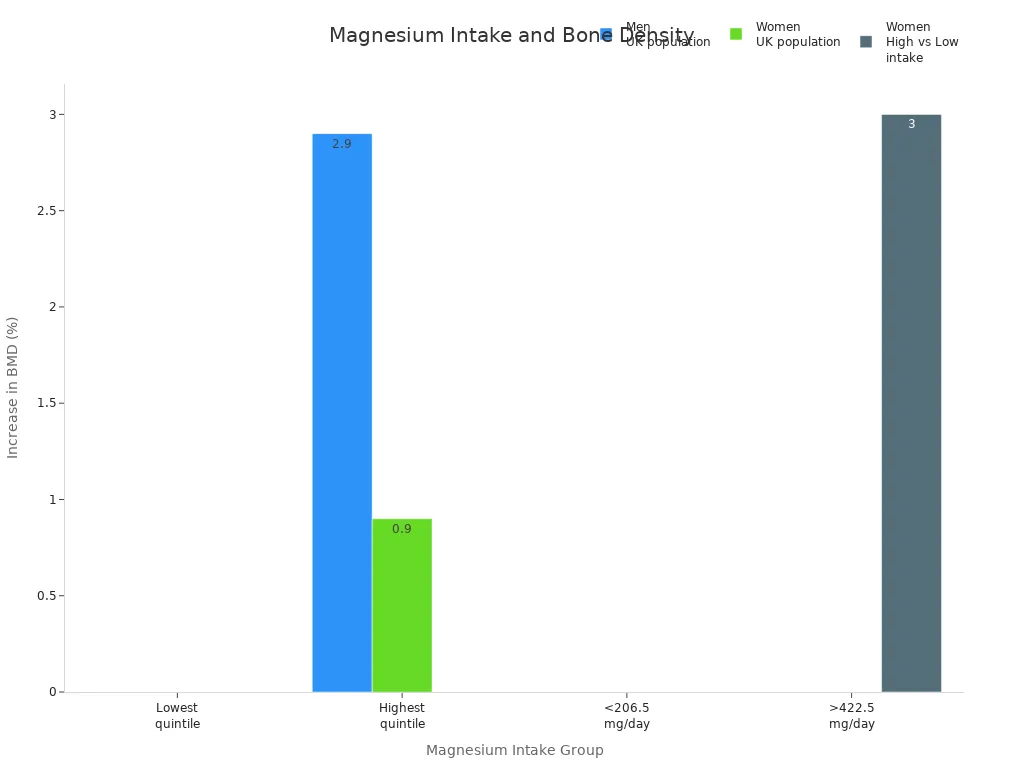
Note: Strong bones and a healthy heart start with enough magnesium. You can protect yourself from fractures and heart problems by choosing magnesium-rich foods.
Energy and Mood
You want to feel energetic and happy every day. The benefits of magnesium reach your mood and energy levels. Magnesium helps your body make ATP, the main energy source for your cells. If you feel tired or run down, you may need more magnesium.
Magnesium fights fatigue and helps you recover after exercise.
It supports your immune system, so you get sick less often.
Magnesium helps you sleep better by calming your nervous system.
Many studies link magnesium to better mood. People with low magnesium often feel stressed, anxious, or depressed. Magnesium helps regulate stress hormones and keeps your mind calm. Clinical trials show that magnesium supplements can lower depression scores and improve mood in people with mild-to-moderate depression.
Magnesium intake reduces stress, depression, and anxiety scores.
Supplementing with magnesium improves mood in people with chronic fatigue, bipolar disorder, and premenstrual syndrome.
Stress and poor sleep can lower your magnesium level, making you feel worse.
If you struggle with sleep or mood swings, try adding more magnesium to your diet. You may notice better sleep, more energy, and a brighter mood.
The benefits of magnesium touch every part of your life. You get stronger muscles, a steadier heart, healthier bones, and a happier mind. Make magnesium a priority and enjoy the difference in your health.
Signs of Low Magnesium
Deficiency Symptoms
You may not realize how important magnesium is until you start feeling the effects of magnesium deficiency. Your body sends warning signs when your magnesium level drops. You might notice muscle spasms, cramps, or weakness. Sometimes your hands shake, or you feel tired for no clear reason. Headaches and constipation can also point to low magnesium. Your heart may race or pound, and you could lose your appetite.
Sleep problems and mood changes often appear with magnesium deficiency. You may struggle to fall asleep or wake up feeling restless. Anxiety, irritability, and sadness can make daily life harder. Doctors often find low potassium and calcium levels in people with magnesium deficiency.
Here is a quick look at common symptoms:
Symptom Category | Symptoms |
|---|---|
Physical Symptoms | Muscle spasms, muscle weakness, tremors, menstrual cramps, constipation, headaches, fatigue, palpitations, loss of appetite |
Psychological Symptoms | Insomnia, sleep disturbances, low mood, anxiety, irritability |
Lab Findings | Low potassium levels, low calcium levels |
If you notice these symptoms, you should check your magnesium intake. Small changes in your diet can help you feel better and avoid bigger health problems.
Who’s at Risk
You may wonder if you are at risk for magnesium deficiency. Some groups face a much higher chance of low magnesium. Pregnant women have the highest rates, with up to 78.9% showing signs of deficiency. Women with hormone-related conditions, osteoporosis, or those taking oral contraceptives also face greater risk. Postmenopausal women and women with climacteric syndrome need to pay extra attention to their magnesium intake.
Studies from around the world show that women are more likely than men to have magnesium deficiency. Pregnant women in India and Sudan show rates as high as 43.6% and 57.2%. If you belong to any of these groups, you should make magnesium a priority in your diet.
Population Group | Prevalence of Magnesium Deficiency | Key Risk Factors / Notes |
|---|---|---|
Pregnant Women | Up to 78.9% | Diastolic blood pressure, previous pregnancy complications, infections, edema |
Women with Hormone-Related Conditions (HRC) | Up to 54.8% | Age, body mass index, various comorbidities |
Women with Osteoporosis | High prevalence | Confirmed high risk group |
Women with Climacteric Syndrome | High prevalence | Confirmed high risk group |
Women Receiving Oral Contraceptives | Elevated risk | Confirmed high risk group |
Postmenopausal Women | Elevated risk | Confirmed high risk group |

You can lower your risk by eating more magnesium-rich foods every day. If you belong to a high-risk group, talk to your doctor about your magnesium needs.
Getting Magnesium
Food Sources
You can easily boost your magnesium by choosing the right foods. Many magnesium-rich foods fit into your daily meals. Nuts and seeds, such as almonds, pumpkin seeds, and chia seeds, pack a powerful punch. Leafy greens like spinach and kale also give you a strong dose. Beans, whole grains, and even dark chocolate help you meet your needs. Fish like tuna and mackerel add variety and nutrition.
Food Category | Examples | % Daily Value (DV) | |
|---|---|---|---|
Bran | Rice bran (1 cup) | 922 mg | 219% DV |
Soy Products | Tofu (1 cup) | 146 mg | 35% DV |
Grains | Quinoa, Buckwheat, Brown rice (1 cup) | 86-120 mg | 12-28% DV |
Nuts | Almonds, Cashews (1 oz) | 25-77 mg | 9-25% DV |
Seeds | Hemp, Flax, Chia (1 oz) | 47-77 mg | 23-47% DV |
Beans | Lentils, Chickpeas (1 cup cooked) | 91-126 mg | 17-30% DV |
Fish | Tuna, Mackerel | 65-109 mg | 17-26% DV |
Vegetables | Spinach, Kale | 24-78 mg | 6-19% DV |
Fruits | Banana, Avocado | 22-32 mg | 5-8% DV |
Dairy | Milk, Yogurt | 24-47 mg | 6-11% DV |
Others | Dark chocolate (1 oz) | 65 mg | 15% DV |
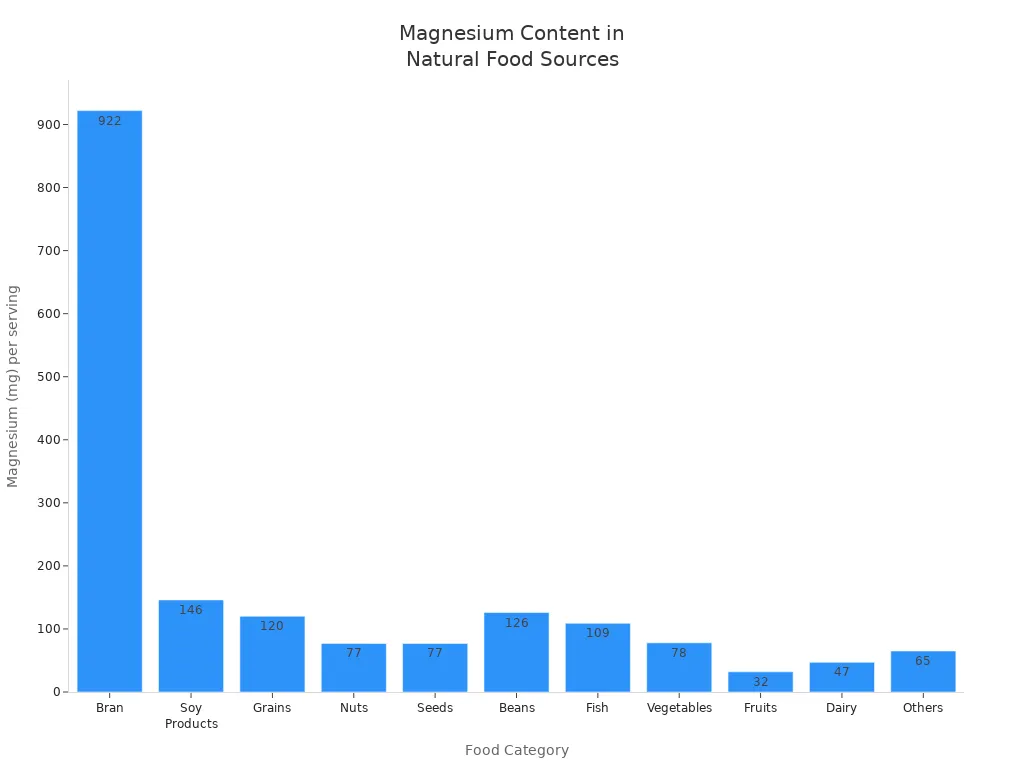
Choose a mix of these dietary sources of magnesium to keep your body strong every day.
Daily Needs
You need the right amount of magnesium for your age and lifestyle. Kids, teens, and adults all have different needs. Pregnant and breastfeeding women need even more to support their health and their baby’s growth.
Age Group / Condition | Male (mg/day) | Female (mg/day) | Notes on Pregnancy/Breastfeeding (mg/day) |
|---|---|---|---|
1–3 years | 80 | 80 | N/A |
4–8 years | 130 | 130 | N/A |
9–13 years | 240 | 240 | N/A |
14–18 years | 410 | 360 | Pregnant teens: 400; Breastfeeding teens: 360 |
19–30 years | 400 | 310 | Pregnant: 350; Breastfeeding: 310 |
31–50 years | 420 | 320 | Pregnant: 360; Breastfeeding: 320 |
51+ years | 420 | 320 | N/A |
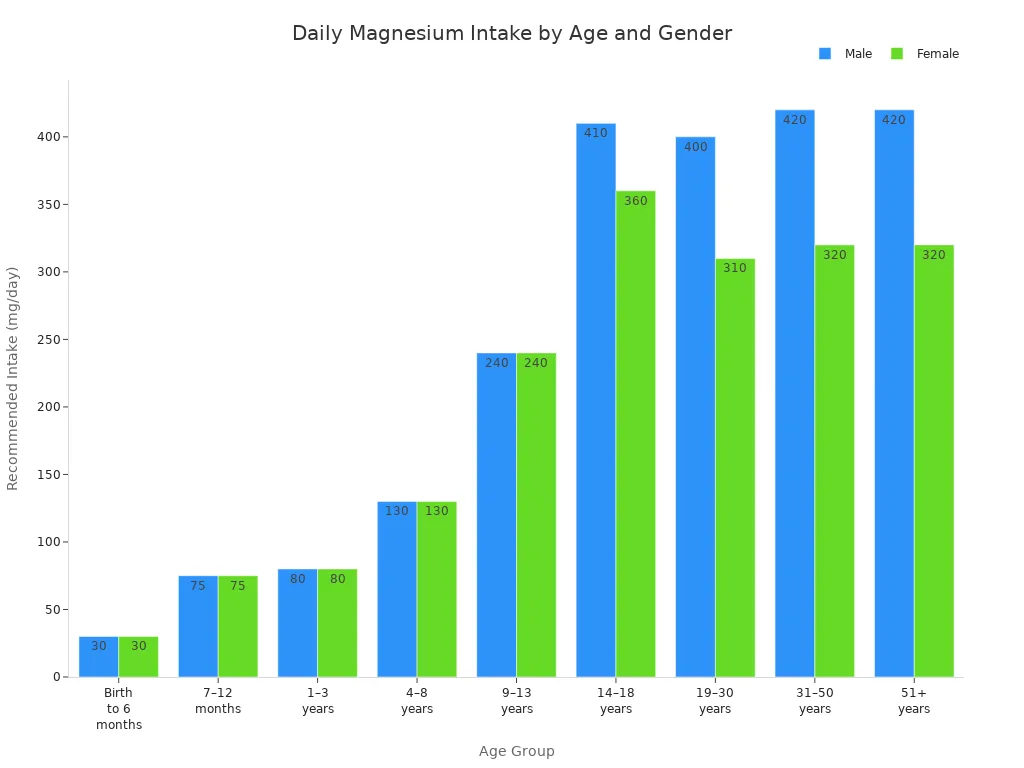
Meeting your daily needs helps you avoid fatigue, cramps, and other health problems.
Easy Tips
You can make small changes to get more magnesium every day. Try these simple ideas:
Add magnesium-rich foods like spinach, kale, almonds, and pumpkin seeds to your meals.
Snack on nuts, seeds, or a square of dark chocolate.
Use whole grains such as brown rice or quinoa instead of white rice or pasta.
Include beans or lentils in soups, salads, or chili.
Top yogurt with chia or flax seeds for a tasty boost.
Eat fish like tuna or mackerel once or twice a week.
Steam or boil vegetables instead of frying to keep more magnesium in your food.
Focus on variety. When you eat a mix of magnesium-rich foods, you give your body what it needs to stay healthy and energized.
Magnesium Supplements
When to Consider
You may wonder if you need magnesium supplements. Most people get enough magnesium from food, but some groups need extra help. If you are older, a woman, drink alcohol often, or take medicines like diuretics or proton pump inhibitors, you have a higher risk of magnesium deficiency. People with kidney disease or digestive problems may also need supplements. Health professionals recommend magnesium supplements for muscle cramps, fatigue, abnormal heart rhythms, constipation, migraines, and mood issues. You should always talk to your doctor before starting magnesium supplements. Your doctor can help you choose the right type and dose for your needs.
Approximate Absorption Rate | |
|---|---|
Magnesium Oxide | ~4% (lowest absorption) |
Magnesium Aspartate | ~40% (highest absorption) |
Magnesium Citrate | ~30% |
Magnesium Glycinate | ~24% |
Magnesium Chloride | High bioavailability |
Magnesium Taurate | High bioavailability |
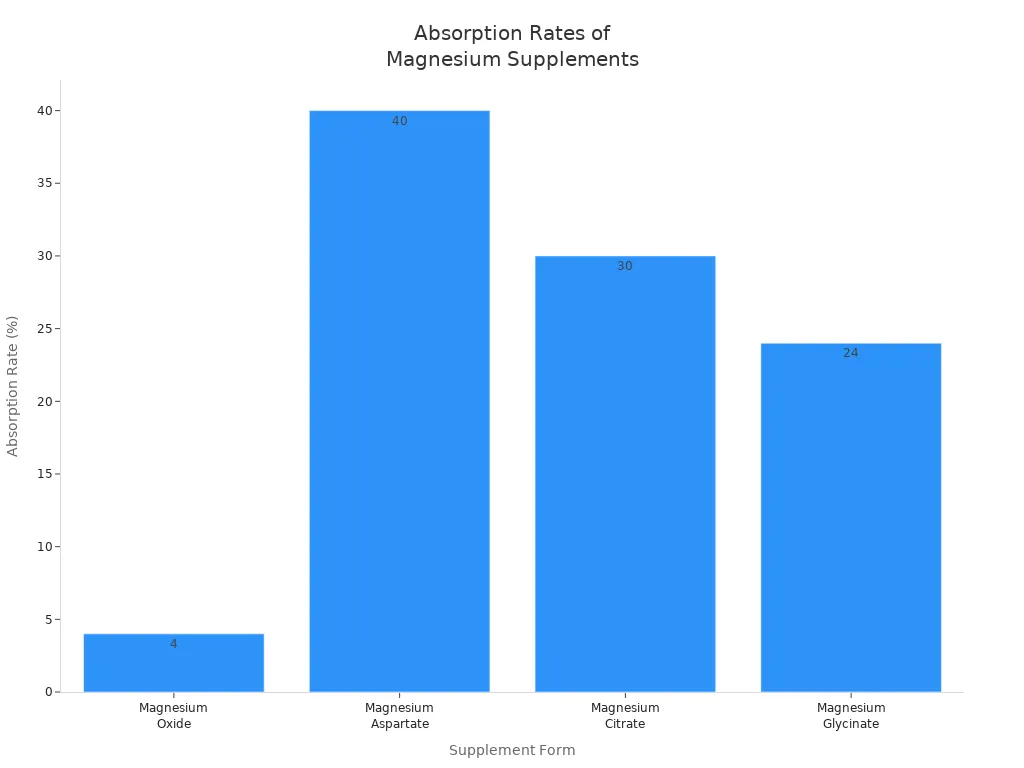
Tip: Magnesium citrate and magnesium chloride are easier for your body to absorb than magnesium oxide.
Safety
You want to stay safe when using magnesium supplements. Most people tolerate magnesium supplements well, especially if they have healthy kidneys. The main side effect is mild diarrhea, which happens if you take too much. Experts suggest you start with a low dose, around 100 mg, and never exceed 350 mg per day unless your doctor says so. Some forms, like magnesium L-threonate, are safe at doses up to 250 mg per day. If you have kidney disease, you must let your doctor manage your magnesium intake. Magnesium supplements can interact with medicines, so always check with your healthcare provider.
Note: Most studies show that side effects from magnesium supplements are rare and mild. Diarrhea is the most common issue, but it usually goes away when you lower your dose.
Too Much Magnesium
You need to watch out for taking too much magnesium. Early signs of overdose include diarrhea, nausea, dizziness, and weakness. Severe cases can cause muscle paralysis, irregular heartbeat, and even cardiac arrest. People with kidney problems face higher risks because their bodies cannot clear extra magnesium. If you notice symptoms like stomach cramps, low blood pressure, or trouble breathing, stop taking magnesium supplements and seek medical help. Always follow the recommended dose and talk to your doctor if you have any health conditions.
Stay smart. Use magnesium supplements only when needed and under medical guidance. Your health and safety come first.
You give your body a real advantage when you include magnesium in your daily meals. This mineral supports your heart, bones, mood, and energy. Most people meet their magnesium needs by eating foods like nuts, leafy greens, and whole grains. Supplements are only necessary if you have a deficiency or a special health condition. Check your diet and talk to your doctor before using supplements. Small changes can boost your health and help you feel your best every day.
FAQ
How do you know if you need more magnesium?
You may notice muscle cramps, tiredness, or trouble sleeping. If you feel these symptoms often, you should check your diet. Add more magnesium-rich foods and see if you feel better. Talk to your doctor for a simple blood test.
Can you get enough magnesium from food?
Yes! You can meet your needs by eating nuts, seeds, leafy greens, and whole grains every day. Choose a variety of these foods. You rarely need supplements if you eat a balanced diet.
Are magnesium supplements safe for everyone?
Most people tolerate magnesium supplements well. If you have kidney problems or take certain medicines, you must talk to your doctor first. Never take more than the recommended dose without medical advice.
What is the best time to take magnesium?
You can take magnesium with meals to help your body absorb it. Many people take it in the evening to support better sleep. Pick a time that fits your routine and stick with it.