Understanding Chelated Magnesium and Its Key Benefits


Chelated magnesium is a high-quality magnesium supplement that you can use to help your body reach optimal magnesium levels. This nutrient helps your muscles, nerves, and heart work well every day. Recent studies show that about 48% of people have magnesium deficiency, which can affect your health. Chelated magnesium is better absorbed and gentler on your stomach than other forms, so you may notice more health benefits like better mood, sleep, muscle support, and heart benefits. You might find chelated magnesium helpful if you want to improve your well-being.
Many clinical studies confirm that chelated magnesium gives you better absorption and fewer digestive side effects compared to regular magnesium supplements.
What Is Chelated Magnesium?
Chelation Explained
You may wonder what makes chelated magnesium different from other magnesium supplements. Chelation is a chemical process where magnesium ions form strong bonds with molecules like amino acids. These molecules, such as glycine or citric acid, wrap around the magnesium, creating a stable ring-like structure. This process keeps the magnesium in a soluble form, even in your stomach’s acidic environment. When magnesium is bound to amino acids, it becomes more stable and less likely to break down before your body can use it. This stability helps your body absorb the nutrient more efficiently, making chelated magnesium a highly absorbable form.
How Chelated Magnesium Is Made
Manufacturers create chelated magnesium by combining magnesium with chelating agents. The most common agents include amino acids like glycine and aspartic acid, or organic acids like citric acid. When magnesium is bound to amino acids, it forms compounds such as magnesium glycinate or magnesium aspartate. These forms are known as some of the best forms of chelated magnesium. You may also find magnesium citrate and magnesium orotate, which use organic acids. These chelating agents not only help with nutrient absorption but also provide extra health benefits. If you look for good sources of magnesium, you will often see these chelated forms listed on supplement labels.
Common chelating agents:
Glycine (magnesium glycinate)
Aspartic acid (magnesium aspartate)
Citric acid (magnesium citrate)
Orotic acid (magnesium orotate)
Why Absorption Is Better
Chelated magnesium stands out because your body can absorb it more easily than non-chelated forms. When you take magnesium supplements that are chelated, the magnesium stays protected as it moves through your digestive system. Clinical studies show that chelated magnesium forms, like magnesium aspartate, can reach absorption rates up to 70%. In comparison, non-chelated forms like magnesium oxide may only absorb at rates as low as 5-10%. The table below shows how different forms compare:
Magnesium Form | Approximate Absorption Percentage |
|---|---|
Magnesium Citrate | |
Magnesium Oxide | 5-10% |
Magnesium Monoaspartate (chelated) | Up to 42% |
Magnesium Glycinate (chelated) | Higher than non-chelated forms |
You get better absorbed magnesium when you choose chelated forms. This means you receive more of the nutrient where your body needs it most. Many experts consider magnesium glycinate and magnesium aspartate the best form of chelated magnesium for both effectiveness and gentle digestion.
Tip: If you want better absorption and fewer stomach issues, chelated magnesium may be the right choice for you.
Chelated Magnesium vs. Other Forms
Types of Magnesium Supplements
You can find many types of magnesium supplements on the market. Each type has a different chemical makeup and absorption rate. Some forms combine magnesium with organic compounds, while others use inorganic elements. The table below shows how these forms differ:
Magnesium Form Type | Examples | Chemical Nature | Absorption Characteristics |
|---|---|---|---|
Organic Magnesium | Magnesium citrate, glycinate, lactate, malate, L-threonate, taurate | Magnesium combined with carbon-containing compounds | Generally better absorbed, more water-soluble but lower elemental magnesium content by weight |
Inorganic Magnesium | Magnesium oxide, chloride, sulfate | Magnesium combined with non-carbon elements | Generally less well absorbed compared to organic forms |
You may notice that organic forms, such as magnesium glycinate and magnesium citrate, offer better bioavailability. Inorganic forms, like magnesium oxide and magnesium chloride, often provide more elemental magnesium but may not absorb as well.
Bioavailability Differences
Bioavailability means how much magnesium your body can use from a supplement. Chelated magnesium, especially magnesium glycinate, stands out for its high bioavailability. Clinical studies show that chelated forms absorb better and reach higher levels in your blood than non-chelated forms. Magnesium citrate also has good bioavailability, but it may cause mild digestive issues for some people.
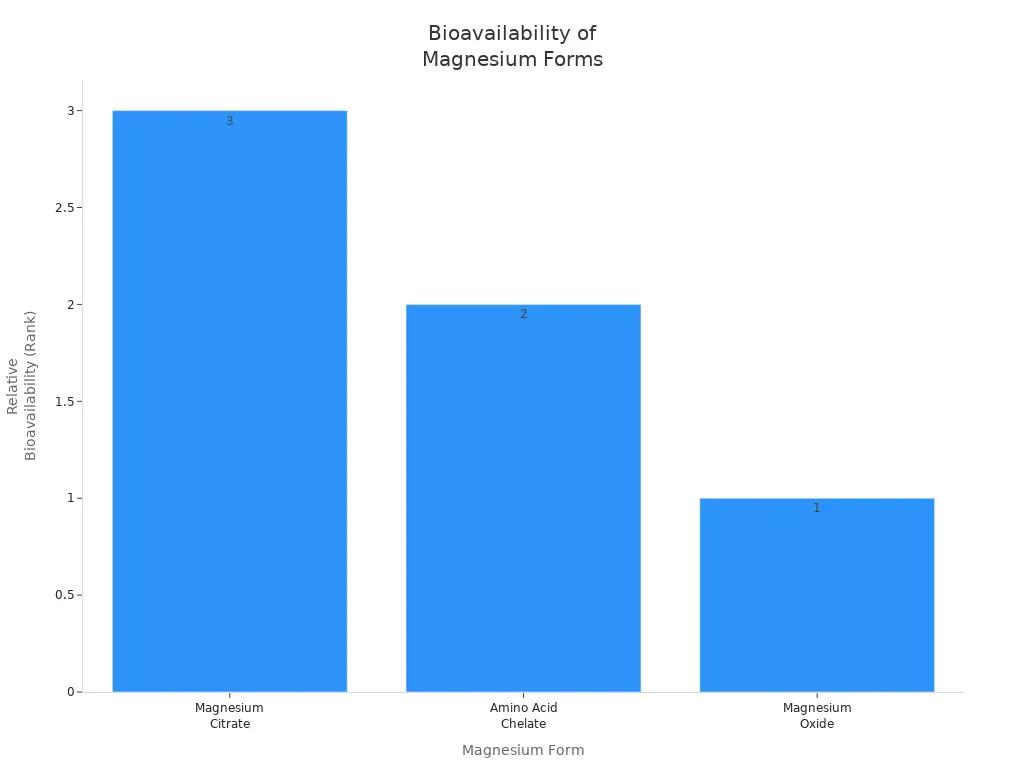
The chart above shows that chelated magnesium and magnesium citrate have higher bioavailability than magnesium oxide. Magnesium oxide contains more elemental magnesium, but your body absorbs less of it. You may get more benefit from chelated magnesium if you want to improve absorption and reduce digestive side effects.
Digestive Tolerance
Digestive tolerance is important when you choose a magnesium supplement. Some forms, like magnesium citrate, can cause diarrhea or stomach upset, especially at high doses. Chelated magnesium, such as magnesium bisglycinate, is gentle on your stomach and less likely to cause digestive discomfort. You may find chelated magnesium helpful if you have a sensitive stomach or want to avoid digestive issues.
Magnesium glycinate absorbs well and rarely causes digestive side effects. Magnesium chloride is also well absorbed, but it may not be as gentle as chelated magnesium. If you want to reduce digestive side effects, chelated magnesium is often the best choice. You can use it for long-term support without worrying about stomach problems.
Tip: If you have trouble with digestive issues from other magnesium supplements, try chelated magnesium for better tolerance and absorption.
Benefits of Chelated Magnesium

Chelated magnesium offers a wide range of health benefits that make it a valuable nutrient for your daily routine. This form of magnesium absorbs well and causes fewer digestive side effects, so you get more of the nutrient where your body needs it most. You can use chelated magnesium to support muscle and nerve function, heart health, blood sugar control, better sleep, mood, bone strength, and even pregnancy wellness.
Muscle and Nerve Support
Your muscles and nerves rely on magnesium for proper function. This nutrient acts as a cofactor in over 300 enzymatic reactions, many of which help your muscles contract and relax. Magnesium also plays a key role in nerve transmission and neuromuscular conduction. When you have enough magnesium, your muscles feel less tense, and your nerves send signals more efficiently.
Magnesium supports nerve transmission and neuromuscular conduction, which are essential for muscle and nerve health.
Low magnesium levels can increase your risk of neurodegenerative diseases like Parkinson’s and Alzheimer’s.
Supplementing with chelated magnesium, such as magnesium glycinate, may help your nerves recover after injury and protect your brain cells.
Magnesium helps regulate calcium in your nerve cells, which supports healthy brain function and reduces nerve inflammation.
You may notice fewer muscle cramps and better nerve health when you use chelated magnesium. This form absorbs well, so your body gets the full benefits.
Heart and Blood Sugar Health
Magnesium is important for your heart and blood vessels. Chelated magnesium absorbs better than other forms, so it can support your cardiovascular system more effectively. This nutrient helps regulate your heartbeat, relaxes blood vessels, and keeps your blood pressure in a healthy range.
Chelated magnesium has superior bioavailability and stability, which means your body uses it more efficiently for heart health.
This form bypasses some digestive issues, so you get more magnesium for your heart and blood vessels.
Magnesium helps your heart muscle contract and supports normal heart rhythm.
Magnesium also plays a major role in blood sugar control. If you have diabetes or prediabetes, you may benefit from chelated magnesium. Clinical studies show that magnesium supplementation can improve insulin sensitivity and help regulate blood sugar levels. Magnesium activates enzymes that help your body use glucose for energy and reduces inflammation, which is important for people with diabetes. Most people with type 2 diabetes have low magnesium, so correcting this deficiency can improve your metabolic health.
Note: Chelated magnesium forms like magnesium glycinate are well absorbed and tolerated, making them a good choice for people with diabetes who want to support healthy blood sugar levels.
Sleep and Mood
If you struggle with sleep or mood, chelated magnesium may help. This nutrient supports better sleep by helping your brain produce chemicals that regulate your sleep cycle. Studies show that adults who take chelated magnesium, such as magnesium L-threonate or magnesium glycinate, experience improved sleep quality, longer deep sleep, and fewer insomnia symptoms. You may also notice better mood, increased energy, and improved alertness.
Magnesium supplementation can also help with mild depression and anxiety. Several clinical trials found that people who took magnesium had lower depression and anxiety scores. Some studies showed that magnesium reduced stress, while others found no significant effect. However, many people with low magnesium levels report feeling better after supplementation.
Study | Sample Size | Disorder | Magnesium Form | Outcome |
|---|---|---|---|---|
Study 1 | 30 patients | Depression | Magnesium oxide | Reduced depression scores |
Study 2 | 112 adults | Depression, Anxiety | Elemental magnesium | Improved depression and anxiety |
Study 3 | 264 adults | Depression, Stress | Magnesium + B6 or Mg alone | Reduced stress symptoms |
You can use chelated magnesium to support better sleep and mood, especially if you want a supplement that absorbs well and causes fewer side effects.
Bone and Pregnancy Health
Magnesium is stored in your bones and helps keep them strong. This nutrient works with vitamin D and calcium to build and maintain bone density. Several studies show that magnesium supplementation increases bone mineral density and reduces bone loss, especially in postmenopausal women and growing children. Chelated magnesium forms, such as magnesium citrate and glycinate, absorb well and help your bones stay healthy.
Study & Population | Magnesium Form | Dosage | Key Findings |
|---|---|---|---|
Postmenopausal women | Mg tablets | Up to 750 mg/day | Increased bone density, fracture prevention |
Teenage girls | Mg oxide powder | 300 mg/day | Increased hip bone mineral content |
Pre-adolescent girls | Mg citrate/oxide + Ca + Vit D3 | 400 mg Mg/day | Increased bone mineral density |
During pregnancy, magnesium supports your baby’s growth and helps prevent muscle cramps. However, large clinical trials do not show a clear benefit of magnesium supplementation for preventing pregnancy complications like pre-eclampsia. No major guidelines recommend chelated magnesium specifically for pregnancy, but it remains an important nutrient for overall health.
Tip: You can use chelated magnesium to support bone health, but always talk to your doctor before starting any supplement during pregnancy.
How to Take Chelated Magnesium
Dosage Guidelines
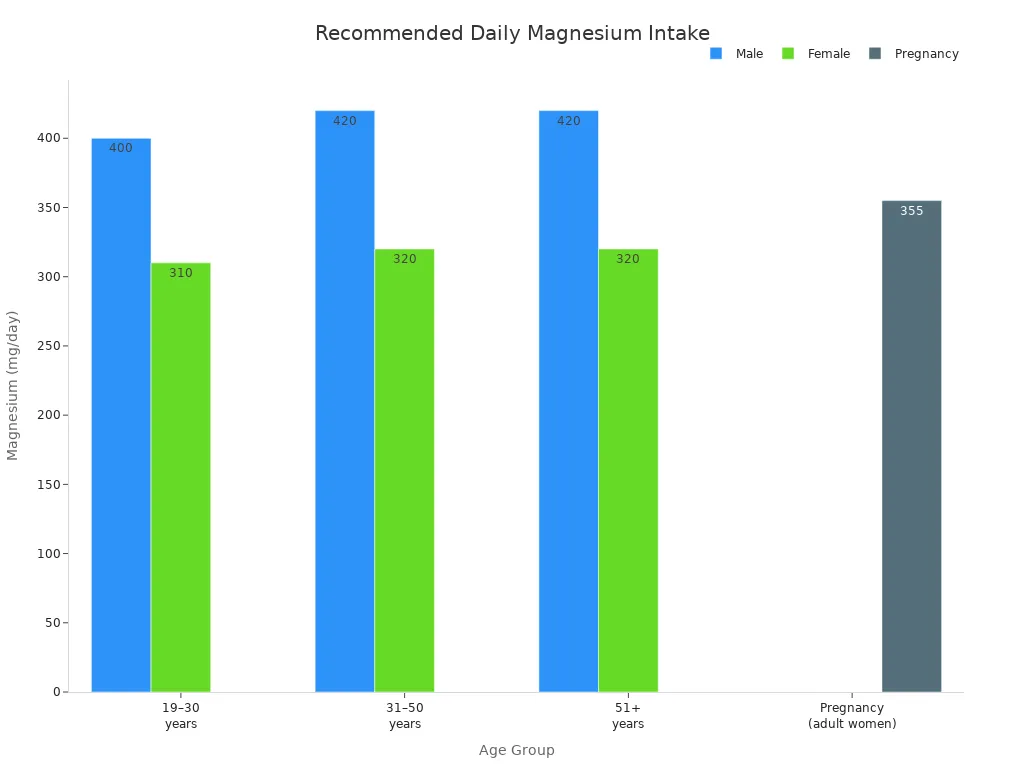
You need to know the right amount of magnesium for your age and health. Health experts say adult men should get 400–420 mg of magnesium each day. Women need 310–320 mg daily. If you are pregnant, you may need 350–360 mg. Most people get some magnesium from food, but supplements can help if you do not get enough. The safe upper limit for magnesium from supplements is 350 mg per day. Too much can cause side effects of chelated magnesium like diarrhea or stomach pain.
Age Group | Male (mg/day) | Female (mg/day) |
|---|---|---|
19–30 years | 400 | 310 |
31–50 years | 420 | 320 |
51+ years | 420 | 320 |
Pregnancy | N/A | 350–360 |
When and How to Take
You may wonder how to take chelated magnesium for the best results. Timing matters because your body uses magnesium differently during the day. If you want better sleep, take magnesium glycinate or citrate 1–2 hours before bed. For energy or mental focus, use magnesium malate or threonate in the morning. Always take magnesium away from high-fiber meals, since fiber can block absorption. If you use other medicines, space magnesium at least 2 hours apart to avoid problems.
Timing | Health Goal | Magnesium Type | Notes |
|---|---|---|---|
Morning | Energy, Focus | Malate, Threonate | Good for daytime use |
Evening | Stress, Digestion | Citrate, Oxide | Take with dinner |
Night | Sleep, Relaxation | Glycinate, Citrate | Take before bed |
Post-Workout | Muscle Recovery | Chloride, Epsom salt | Use after exercise |
Who Should Consider It
You may benefit from chelated magnesium if you have certain health problems. People with asthma, migraines, high blood pressure, diabetes, or constipation often need more magnesium. Pregnant women and those with preeclampsia may also need extra magnesium. If you have kidney disease, talk to your doctor before using magnesium supplements. You should always check with a healthcare provider if you take other medicines or have health concerns.
Asthma
Migraine headaches
Hypertension
Diabetes and diabetic complications
Constipation
Pregnancy (with doctor’s advice)
Safety and Side Effects
You must think about safety before starting magnesium. Most people tolerate chelated magnesium well, but side effects of chelated magnesium can happen. Common problems include diarrhea, nausea, and stomach pain. These side effects are more likely if you take more than 350 mg from supplements. Serious problems like muscle cramps or allergic reactions are rare but need medical help. Magnesium can interact with many drugs, so always tell your doctor about all supplements you use. If you have kidney disease, you need regular checks to keep magnesium levels safe.
Tip: Start with a low dose and increase slowly. Watch for side effects and talk to your doctor if you notice any problems.
You can choose chelated magnesium for its strong absorption and gentle effect on your stomach. Many healthcare providers recommend it because you get more benefits with fewer side effects.
It absorbs well and helps you avoid stomach discomfort.
It works best for people who need better absorption or have sensitive digestion.
Always talk to your doctor before starting any new supplement to make sure it is safe for you.
FAQ
What makes chelated magnesium different from regular magnesium supplements?
Chelated magnesium binds to amino acids. Your body absorbs it better than regular magnesium. You may notice fewer stomach problems. This form works well for people who need gentle digestion.
Can you take chelated magnesium every day?
Yes, you can take chelated magnesium daily. Most people use it to fill gaps in their diet. Always follow the dosage on the label. Talk to your doctor if you have health concerns.
Does chelated magnesium help with sleep?
You may sleep better with chelated magnesium. It helps your brain relax and supports healthy sleep cycles. Many people use magnesium glycinate before bed for better rest.
Are there any foods high in chelated magnesium?
You will not find chelated magnesium in foods. Foods like nuts, seeds, leafy greens, and whole grains give you natural magnesium. Chelated forms come from supplements.
Who should avoid chelated magnesium?
People with kidney disease should avoid chelated magnesium unless a doctor says it is safe.
If you take certain medicines, ask your doctor before using magnesium supplements.