What is Copper in Nutrition? Definition, Health Functions & Supplement Guidance

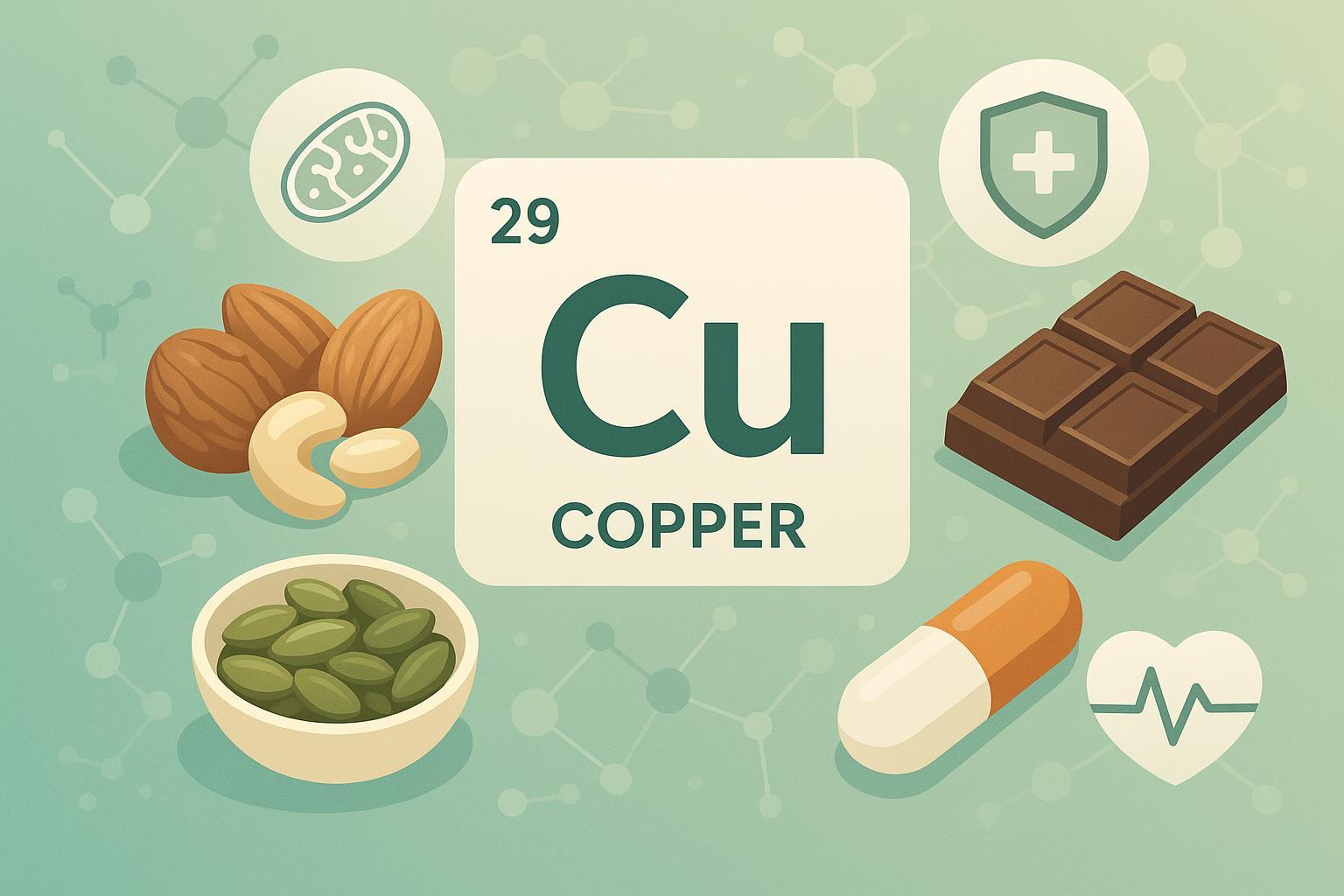
Copper, symbolized as "Cu," is an essential trace mineral that plays a vital role in human health. Unlike copper used in pipes or wires, nutritional copper must be obtained in small, regulated amounts from food or supplements, acting as a critical cofactor in various biological pathways. According to the NIH Office of Dietary Supplements, copper is required for energy production, the formation of connective tissue and red blood cells, maintenance of immune and nervous system health, and antioxidant defense.
Biological Functions of Copper
Copper works as a cofactor in numerous enzymatic reactions, helping:
Convert food into cellular energy
Build and maintain strong connective tissues (e.g., collagen)
Produce and regulate red blood cells
Support immune system activity and antioxidant defenses via enzymes like superoxide dismutase
Aid in iron metabolism and nervous system function
Dietary Sources & Recommended Intake
Copper is naturally found in nuts, seeds, lentils, dark chocolate, whole grains, organ meats (liver), shellfish, and some green leafy vegetables. Most adults can meet their recommended daily intake (RDI) with a balanced diet—0.9 mg per day for adults, as guided by the NIH.
Food Source | Copper (mg/serving) |
|---|---|
Beef liver (3 oz) | 3.6 |
Cashews (1 oz) | 0.6 |
Dark chocolate | 0.5 |
Sunflower seeds | 0.5 |
Chickpeas (½ cup) | 0.3 |
For a full list, see Harvard Nutrition Source.
Copper Supplement Forms & Absorption
In supplements, copper can be provided as chelated copper (e.g., copper bisglycinate), copper gluconate, or cupric oxide. Science favors chelated forms for superior bioavailability—meaning your body absorbs and uses them better. Cupric oxide is less well-absorbed and generally less preferred in premium supplements. Well-designed multi-mineral blends often contain chelated copper to optimize efficacy.
Deficiency & Toxicity: Symptoms and Safety
Copper deficiency can present as fatigue, anemia resistant to iron, weakened immunity, connective tissue or bone issues, and, in severe cases, neurological symptoms. On the other hand, excessive copper intake may result in nausea, abdominal pain, liver damage, and, rarely, serious toxicity. Most healthy adults are not at risk unless consuming very high doses of supplements or affected by rare genetic conditions. Always follow recommended dosages and consult a healthcare professional for personalized advice.
Balancing Copper With Other Minerals
Copper interacts closely with zinc and iron. Too much zinc can cause copper deficiency, while excess copper can impact zinc status. Optimal copper: zinc ratios are key for immune and metabolic health—hence, many supplement brands balance these minerals in their formulations. Iron metabolism also depends on adequate copper; people with unexplained anemia may benefit from reviewing their copper intake.
Copper in Supplementation: Who May Benefit?
Individuals with digestive disorders impacting mineral absorption
High-intensity workers, older adults, or those at risk of deficiency
People taking large doses of zinc for extended periods
Consumers pursuing energy, immunity, men’s health, or anti-aging support
How Naxttii Health Approaches Micronutrient Support
At Naxttii Health, our science-backed philosophy prioritizes evidence-based nutrition, rigorous ingredient selection, and balanced micronutrient formulas for everyday wellness—including core areas like immunity, energy, bone, heart health, and anti-aging. While not all products contain copper, our commitment ensures any inclusion uses high-quality, bioavailable forms within safe, effective blends, supported by expert recommendations.
Interested in daily health optimization? Explore our educational resources or contact us for custom supplement advice. Discover Naxttii Health’s product solutions designed for your balanced wellness needs.
References: NIH Office of Dietary Supplements, Harvard Nutrition Source: Copper, Medical News Today: Copper
Further Reading:
Zinc in Nutrition
Iron Balance & Health
Myth-Busting: Copper as Nutrient vs. Heavy Metal Fear
Remember, copper as an essential nutrient is needed only in trace amounts. Environmental exposure and toxicity (from industrial sources) differ from regulated nutritional copper, which is necessary for health. Always seek quality assurance when choosing supplements.
Start your daily wellness journey with reliable, science-backed nutrition—quality you can count on.