Do Low Magnesium Levels Raise Atrial Fibrillation Risk


You may wonder how Magnesium Levels affect your heart. Research shows low magnesium can raise your risk of atrial fibrillation, but the link stays complex. Many adults have low magnesium without knowing it. Look at these numbers:
Study Location | Prevalence of Low Magnesium Levels | Additional Notes |
|---|---|---|
Germany | Hypomagnesaemia (below 0.76 mmol/L) | |
Mexico | 36.3% of women, 31% of men | Low serum magnesium in a national survey |
France | 23% of women, 18% of men | Inadequate intake among adults |
General Population | 10%–30% | Subclinical deficiency (<0.80 mmol/L) |
Postmenopausal Women | 84% with osteoporosis | Low bone magnesium content |
Brazilian University Students | 42% | Subnormal magnesium status |
You might ask how this connects to afib. Studies show people with the lowest magnesium levels face about a 30% higher chance of developing atrial fibrillation. The risk goes up, especially if you have no history of heart disease.
Atrial Fibrillation Overview
What Is Atrial Fibrillation
You may hear doctors talk about atrial fibrillation when they describe an irregular heartbeat. This condition happens when the upper chambers of your heart beat out of sync with the lower chambers. Your heart may not pump blood as well as it should. Many people around the world live with this condition.
Did you know?
About 37.6 million people have atrial fibrillation worldwide.
This number equals about 0.51% of the global population.
Over the past 20 years, the number of cases has grown by 33%.
Age can affect your risk. People with afib tend to be older than those without it. Studies show that the average age of patients with afib is 56.5 years, while those without it average 53.8 years. Lower magnesium levels also appear more often in people with afib.
Here is a table showing how magnesium levels relate to risk:
Serum Magnesium Level | Hazard Ratio (HR) | 95% Confidence Interval (CI) | P-value |
|---|---|---|---|
Less than 5th percentile | 1.85 | 1.54 to 2.21 | < 0.001 |
5 to less than 20th percentile | 1.36 | 1.19 to 1.55 | < 0.001 |
Less than 5th vs 40 to less than 60th | 1.43 | 1.19 to 1.72 | < 0.001 |
5 to less than 20th vs 40 to less than 60th | 1.22 | 1.06 to 1.39 | 0.004 |
AFib Symptoms
You may notice several symptoms if you have afib. Some people feel nothing, but others experience strong signs.
Common symptoms include:
Heart palpitations or a fluttering feeling in your chest
Fatigue or general tiredness
Shortness of breath, especially during activity
Dizziness or lightheadedness
Chest discomfort or pain
Weakness or feeling faint
Exercise intolerance
Anxiety
You might feel more than one symptom at a time. Palpitations are the most common, followed by shortness of breath and fatigue. If you notice these signs, you should talk to your doctor. Early detection helps you manage your health better.
Magnesium Levels and Heart Health

Magnesium’s Role in the Heart
You may not realize how important magnesium is for your heart. This mineral helps your heart keep a steady rhythm. It controls the timing of electrical signals in the heart’s AV node. When you have healthy magnesium levels, your heart cells work together to keep your heartbeat regular.
Magnesium helps move other electrolytes, like calcium and potassium, in and out of heart cells.
It supports the normal function of your heart muscle.
Magnesium levels help prevent muscle cramps and irregular heartbeats.
If you do not get enough magnesium, your heart may beat too quickly or feel like it is fluttering. Many people with atrial fibrillation have low magnesium levels.
Effects of Low Magnesium Levels
Magnesium deficiency can cause real problems for your heart. When your magnesium levels drop, your heart’s electrical system can become unstable. This makes you more likely to have arrhythmias, which are irregular heartbeats.
Magnesium deficiency affects your heart in several ways:
It can change the way your heart’s ion channels work.
It may lead to longer action potentials in heart cells, making arrhythmias more likely.
Low magnesium levels can cause changes on an ECG, such as a longer P wave or QTc interval.
Doctors use different methods to check for magnesium deficiency. Here is a table that shows how they do it:
Diagnostic Method | Description |
|---|---|
Serum Magnesium Level | Hypomagnesemia is when your level is less than 1.5 mEq/L, but this test does not show total body magnesium. |
Urinary Magnesium Level | This test gives an indirect look at your total body magnesium, especially when compared to serum levels. |
Clinical Symptoms | Symptoms or other low electrolytes, like potassium or calcium, can point to magnesium deficiency. |
If you notice symptoms like muscle cramps, palpitations, or weakness, you should talk to your doctor. Keeping your magnesium levels in a healthy range helps protect your heart.
Magnesium Levels and Atrial Fibrillation Incidence
Major Studies
You may wonder how scientists study the link between magnesium and atrial fibrillation. Researchers have used large cohort studies to explore this connection. These studies follow thousands of people over many years. They measure serum magnesium and track who develops afib or other arrhythmias.
Here is a table showing what some of the most important studies found:
Study | Findings |
|---|---|
Inversely related serum potassium and magnesium levels to AF risk; higher phosphate levels associated with increased AF risk; no correlation with calcium levels. | |
Low Serum Magnesium Study | Low serum magnesium linked to AF development in individuals without cardiovascular disease; lowest quartile had ~50% higher risk of AF. |
Circulating Magnesium Study | Higher serum magnesium associated with lower risk of major adverse cardiac events among AF patients. |
You can see that these studies focus on serum magnesium, not just dietary intake. The ARIC study found that people with lower serum magnesium had a higher risk of atrial fibrillation. The Low Serum Magnesium Study showed that people without cardiovascular diseases but with low serum magnesium had about a 50% higher chance of developing afib. The Circulating Magnesium Study found that higher serum magnesium levels lowered the risk of major heart problems in people who already had atrial fibrillation.
Researchers use several methods to measure serum magnesium in these studies. Most labs use spectrophotometry. Some also use atomic absorption spectrophotometry (AAS) or inductively coupled plasma optical emission spectrophotometry (ICP-OES). These methods help doctors and scientists get accurate serum magnesium levels. Some newer methods, like fluorescent probes and nuclear magnetic resonance, can measure both free and protein-bound magnesium.
Association Strength
You may ask how strong the link is between serum magnesium and atrial fibrillation incidence. Many studies show a moderate association. People with low serum magnesium have a higher risk of developing afib, especially if they do not have other cardiovascular diseases. This means that low serum magnesium can be a warning sign for future arrhythmias.
Here is a table that summarizes what researchers have found:
Finding | Description |
|---|---|
Association | Identified a link between low serum magnesium levels and higher atrial fibrillation risk. |
No significant association found between dietary magnesium and atrial fibrillation incidence. | |
Future Research | Calls for further studies to explore mechanisms and temporal changes in serum magnesium levels. |
Another table shows more details about the risk:
Finding | Description |
|---|---|
Association | Hypomagnesemia linked to increased risk of atrial fibrillation in community-based populations. |
Threshold | Increased risk observed below serum magnesium concentration of 1.9. |
Nature of Association | Suggests a correlation rather than a direct causative effect. |
You should know that most studies focus on serum magnesium, not just how much magnesium you eat. When researchers look at dietary magnesium intake, they do not find a strong link to atrial fibrillation incidence. Here is a table that shows this:
Atrial Fibrillation Incidence | Significance | |
|---|---|---|
Lowest (median < 180.9 mg/day) | No significant difference | Not significant |
Middle (median 223.2–264.8 mg/day) | Reference group | - |
Highest (median ≥320.1 mg/day) | No significant difference | Not significant |
You may notice that eating more magnesium does not always lower your risk of afib or other arrhythmias. The key factor is your serum magnesium level. Doctors use this measurement to check your risk for atrial fibrillation and other arrhythmias.
Nationwide population-based cohort studies show that low serum magnesium increases the risk of incident af and other atrial arrhythmias. This risk becomes more noticeable when your serum magnesium drops below 1.9. The association appears moderate, not absolute. You may have low serum magnesium and never develop afib, but your risk does go up.
Researchers agree that more studies are needed. They want to understand how changes in serum magnesium over time affect your risk of arrhythmias. They also want to know if raising serum magnesium can prevent atrial fibrillation or other arrhythmias in people with low levels.
Note: If you have concerns about your serum magnesium or risk for atrial fibrillation, talk to your doctor. They can help you decide if you need testing or treatment.
Development of AFib and Magnesium
Mechanisms Linking Magnesium to AFib
You may wonder how magnesium affects the development of afib. Scientists have found several ways that low magnesium can change your heart’s rhythm. When your serum magnesium drops, your heart cells may not work as they should. This can make it easier for irregular heartbeats to start.
Here are some ways magnesium may play a role in the development of afib:
Low serum magnesium can change the way your heart’s electrical system works. This makes it easier for abnormal rhythms to begin.
The Framingham Heart Study shows a moderate link between low serum magnesium and the development of afib, especially in people without other heart problems.
Many people have hypomagnesemia, or low serum magnesium, which may increase the risk of atrial fibrillation.
If you do not get enough magnesium in your diet, you may develop heart problems at any age. Magnesium-deficient diets can make heart issues worse, but magnesium supplements may help prevent these problems.
When you have hypomagnesemia, you may need more medicine like digoxin to control afib. You also have a higher risk of arrhythmias caused by digitalis. Doctors sometimes use intravenous magnesium sulfate to help manage afib with a fast heart rate.
Your serum magnesium level acts as a signal for your heart’s health. If your level drops too low, your risk for the development of afib goes up. Keeping your magnesium in a healthy range helps your heart’s electrical system stay stable.
Tip: Ask your doctor to check your serum magnesium if you have symptoms of irregular heartbeat or if you take medicines for heart rhythm.
Conflicting Evidence
You may see different results in studies about magnesium and the development of afib. Some research shows that magnesium helps control heart rhythm, but other studies do not find the same results. This makes it hard to know exactly how magnesium affects atrial fibrillation.
Here is a table that shows what some studies found:
Study | Findings |
|---|---|
Onalen et al | IV magnesium sulfate works well with standard medicines for acute afib. |
Kwok et al | No extra benefit from magnesium with digoxin or ibutilide for afib with rapid heart rate. |
Researchers face some problems when they study magnesium and atrial fibrillation:
Studies use different methods and patient groups, which makes results hard to compare.
Some studies have a risk of bias, so the results may not be reliable.
The evidence is not strong enough to apply to everyone.
Doctors cannot always tell which patients will benefit from magnesium supplements.
You should know that the link between serum magnesium and the development of afib is not simple. Some people with low serum magnesium never get atrial fibrillation. Others may develop afib even with normal magnesium levels. More research will help doctors understand who needs magnesium and how much is best.
Maintaining Magnesium Levels

Dietary Sources
You can support your heart health by choosing foods high in magnesium. Many foods offer a natural way to boost your daily magnesium intake. Try adding these magnesium-rich foods to your meals:
Quinoa (1 cup cooked): 118 mg
Brown rice (1 cup cooked): 86 mg
Shredded wheat (2 large biscuits): 61 mg
Whole wheat bread (1 slice): 23 mg
Leafy greens like spinach and kale
Banana (1 medium): 32 mg
Dark chocolate (1 ounce, 70-85% cacao): 64.6 mg
Milk (1 cup): 24-27 mg
Plain yogurt (8 ounces): 42 mg
Fatty fish such as salmon
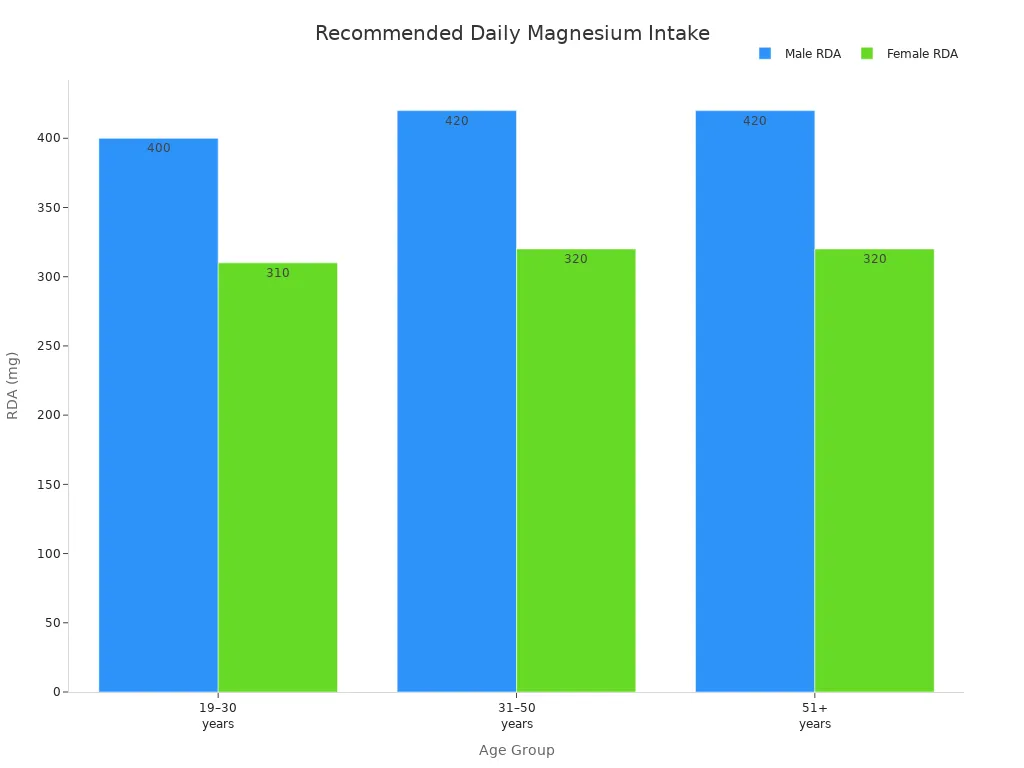
You should pay attention to your dietary intake of magnesium. Drinking water quality also matters. Magnesium concentration in drinking water can vary by location. Some areas have higher magnesium in drinking water, which helps you meet your individual magnesium intake goals. If you want to know how much magnesium you need, check the recommended daily magnesium intake levels:
Age Group | Male RDA | Female RDA |
|---|---|---|
19–30 years | 400 mg | 310 mg |
31–50 years | 420 mg | 320 mg |
51+ years | 420 mg | 320 mg |
Supplements
You may consider magnesium supplementation if you cannot get enough from food or drinking water quality is low. Magnesium administration can help raise serum levels, especially if your doctor finds you have low serum magnesium. However, studies show that magnesium supplementation has not been proven to prevent atrial fibrillation or afib in people with normal serum magnesium. Some research suggests a benefit for those with magnesium deficiency, but results remain mixed.
Magnesium administration can cause side effects. You might experience diarrhea, nausea, vomiting, or stomach pain. High doses may lead to more serious problems like muscle weakness, confusion, or abnormal heartbeat. People with kidney issues should be extra careful, since their bodies may not remove excess magnesium well.
When to Seek Medical Advice
You should talk to your healthcare provider if you notice symptoms like frequent muscle cramps, fatigue, irritability, poor sleep, or digestive issues. Your doctor can check your serum magnesium and other electrolytes. If you have concerns about magnesium concentration in drinking water or your individual magnesium intake, ask for advice. Medical experts can guide you on safe magnesium administration and help you decide if supplements are right for you.
Tip: Always consult your doctor before starting any new supplement, especially if you have heart problems or kidney disease.
Other AFib Risk Factors
Lifestyle Factors
You can lower your chance of developing afib by understanding common risk factors in your daily life. Many habits and health conditions affect your heart’s rhythm and your serum magnesium levels. Here are some lifestyle choices and health issues that raise your risk factor for atrial fibrillation:
Drinking large amounts of alcohol can increase your risk factor for afib.
Using illegal drugs, such as cocaine, may trigger or worsen afib.
Extreme physical activity, especially in competitive athletes, can raise your risk factor.
Smoking is linked to a higher risk factor for afib.
You should also pay attention to other health conditions. The table below shows how these risk factors affect your heart:
Lifestyle Factor | Risk Description |
|---|---|
Obesity | Raises afib risk factor 1.5-fold according to the Framingham Heart Study. |
High Blood Pressure | Most common risk factor in people with afib. |
Sleep Apnea | Affects 21% to 87% of those with afib. |
Diabetes | Nearly 40% increased risk factor for developing afib. |
Alcohol Consumption | Large amounts, especially binge drinking, raise afib risk factor. |
Smoking | Increases afib risk factor, higher with longer smoking duration. |
Extreme Physical Activity | May lead to higher afib risk factor, especially in competitive athletes. |
Physical activity also plays a role. Mild to moderate exercise can help lower your risk factor for afib. If you choose moderate activity, you may protect your heart and keep your serum magnesium levels healthy. Vigorous exercise does not show the same benefit and may even increase your risk factor, especially if you are younger. In older adults, regular moderate activity lowers the chance of afib.
Other Nutrients
You should know that magnesium is not the only nutrient that affects your heart rhythm and serum levels. Other nutrients also play a role in your risk factor for afib. These include antioxidants, omega-3 fatty acids, potassium, selenium, and carotenoids. Potassium, in particular, works with magnesium to keep your heart’s electrical system stable.
The table below shows how potassium and magnesium levels relate to afib risk:
Measurement | Result | Odds Ratio (OR) | 95% Confidence Interval (CI) | p-value |
|---|---|---|---|---|
Increased risk factor | 1.43 | 1.17-1.75 | < 0.001 | |
Magnesium < 1.0 mmol/L | No increased risk factor | 0.89 | 0.71-1.13 | 0.342 |
Magnesium administration | Increased risk factor | 1.61 | 1.33-1.96 | < 0.001 |
You can support your heart by eating foods rich in magnesium and potassium. These nutrients help maintain healthy serum levels and lower your risk factor for afib. Always talk to your doctor before making changes to your diet or taking supplements.
You have learned that low magnesium levels increase your risk for atrial fibrillation, especially if you do not have other heart conditions. Many people experience hypomagnesemia, which can affect heart rhythm and rate control. To support your heart, aim for recommended magnesium intake through diet and watch for losses during food processing. Before changing your magnesium intake, speak with your healthcare provider. You can manage afib risk by eating a balanced diet, staying active, reducing stress, and scheduling regular check-ups. Take charge of your heart health today.
FAQ
Can you check your magnesium level at home?
You cannot check your magnesium level at home. Doctors use blood tests to measure serum magnesium. If you feel symptoms like muscle cramps or irregular heartbeat, ask your doctor for a test.
Does taking magnesium supplements prevent atrial fibrillation?
Magnesium supplements do not guarantee prevention of atrial fibrillation. Studies show mixed results. You should only take supplements if your doctor recommends them.
What foods help you boost magnesium naturally?
You can eat leafy greens, nuts, seeds, whole grains, and fish to increase magnesium. Try adding spinach, almonds, and brown rice to your meals.
Tip: Choose fresh foods over processed ones for higher magnesium content.
Are there risks if you take too much magnesium?
Yes, taking too much magnesium can cause diarrhea, nausea, and weakness. People with kidney problems face higher risks. Always follow your doctor’s advice.
Symptom | Possible Cause |
|---|---|
Diarrhea | High magnesium |
Muscle weakness | Excess magnesium |
Nausea | Over-supplementing |
Should you worry about magnesium in drinking water?
Most tap water contains some magnesium. If you live in an area with low magnesium in water, you may need more from food. Ask your local water supplier for details.