Magnesium Types for Heart Palpitations: A 2025 Guide


You may wonder which magnesium types support your heart best. Magnesium taurate, glycinate, malate, citrate, and orotate stand out for their roles in heart health and rhythm. Each offers unique benefits:
Magnesium Type | Key Heart Benefit |
|---|---|
Taurate | Supports heart rhythm and electrolyte balance |
Glycinate | Calms nerves, helps anxiety-related palpitations |
Malate | Boosts energy and muscle function |
Citrate | Absorbs easily, aids cardiovascular health |
Orotate | Supports overall heart health |
Always consult your healthcare provider before starting magnesium supplementation or new supplements. Palpitations are rising globally, and choosing the right magnesium type may help support your heart.
Heart Palpitations Overview
Symptoms
You may notice heart palpitations as a fluttering, racing, or flip-flopping feeling in your chest or neck. Many people describe palpitations as skipped beats or a pounding heartbeat. These sensations can happen at rest or during activity. You might also experience other symptoms with palpitations:
Shortness of breath
Chest pain or pressure
Dizziness or lightheadedness
Sweating
Nausea
Anxiety
Palpitations often link to arrhythmia, including afib. Sometimes, palpitations come with fatigue, weakness, or fainting. If you feel chest pain or pressure with palpitations, seek emergency care. These signs may point to a heart attack or stroke. Stress-induced palpitations can happen when adrenaline surges. Exercise, stimulants like caffeine, or large meals may trigger palpitations. Pregnancy and hormonal changes can also cause palpitations, which are usually harmless.
Tip: If you notice palpitations with dizziness, chest pain, or fainting, talk to your doctor right away.
Causes
Heart palpitations can start for many reasons. Some causes relate to your heart, while others do not. The table below shows the most common causes and how often they occur:
Cause | Approximate Frequency (%) |
|---|---|
Psychosomatic factors | 31 |
Atrial fibrillation (afib) | 16 |
Supraventricular tachycardia | 10 |
Medication/illicit substances | 6 |
Systemic disease | 4 |
Structural heart disease | 3 |
Ventricular tachycardia | 2 |
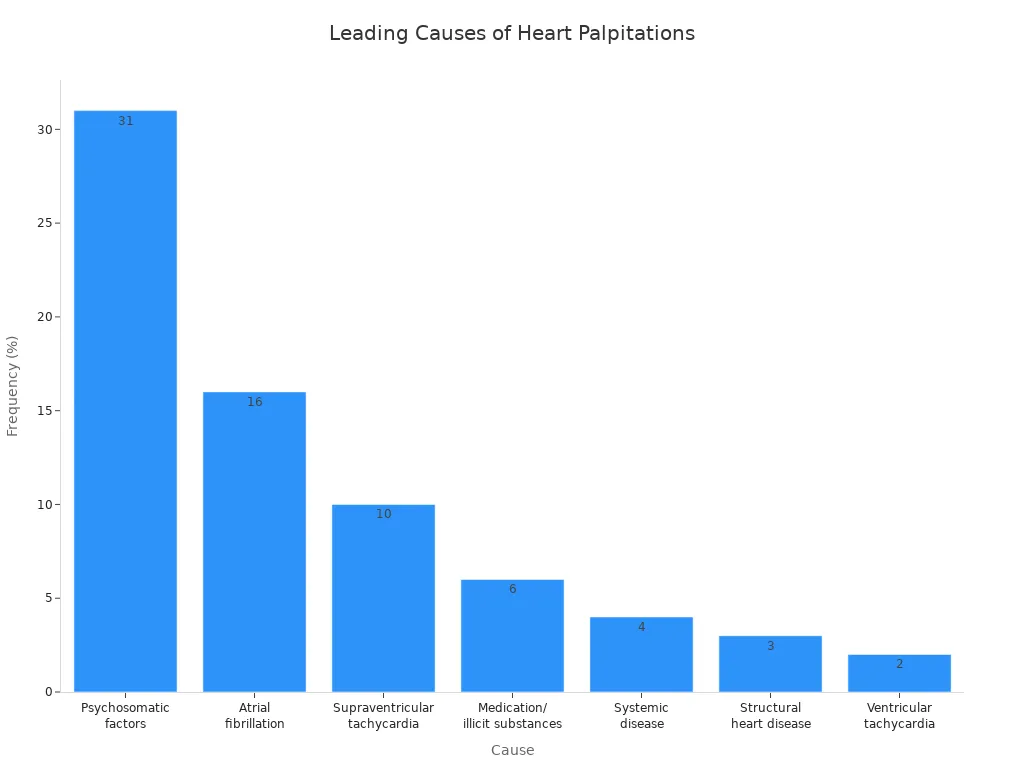
You may get palpitations from stress, anxiety, or panic attacks. Vigorous exercise, stimulants like caffeine or nicotine, and some medications can cause palpitations. Foods high in sugar or fat, nutritional supplements, and electrolyte imbalances also play a role. Fever, anemia, thyroid problems, and hormonal changes during pregnancy or menopause may trigger palpitations. Lack of sleep can make your heart beat faster and lead to palpitations. Arrhythmia, including afib, is a major cardiac cause. Doctors use your history and tests to find the reason for your palpitations.
Magnesium and Heart Health
Role in Heart Rhythm
Magnesium plays a key role in keeping your heart healthy. You need magnesium for the regulation of heart rhythm. This mineral helps control how electricity moves through your heart. Magnesium supports the transport of potassium into heart cells. Potassium is important for maintaining heart muscle function and healthy heart rhythms. When you have enough magnesium, your heart can beat in a steady and regular way.
Current research shows that magnesium affects ion channels for potassium, calcium, and sodium. These channels help your heart send electrical signals. Magnesium also helps your heart’s AV node slow down impulses so your heart chambers contract properly. If you have low magnesium, you may notice arrhythmia or palpitations. Some people with afib have lower magnesium levels. Doctors study magnesium because it may help prevent irregular rhythm and support cardiovascular health.
Magnesium helps your heart stay in rhythm by balancing electrolytes and supporting electrical activity.
Deficiency Effects
Magnesium deficiency can cause problems for your heart health. If you do not get enough magnesium, your heart’s electrical system may not work right. The AV node may open and close too quickly, making your heart beat faster and less regularly. You may feel palpitations, skipped beats, or pounding in your chest. Magnesium deficiency can lead to arrhythmia, including afib and other irregular heart rhythms.
You might notice other symptoms if your magnesium is low:
Fatigue
Muscle spasms
Weakness
Loss of appetite
Numbness or tingling
Nausea
Stiffness
To keep your heart healthy, you should eat foods rich in magnesium. Good choices include pumpkin seeds, almonds, spinach, cashews, peanuts, soy milk, black beans, and bananas. These foods help you maintain heart health and reduce the risk of palpitations. Supplements may help if your doctor recommends them, but food sources are safer for most people. Magnesium supports cardiovascular health and helps prevent arrhythmia.
Tip: If you notice frequent palpitations or symptoms of magnesium deficiency, talk to your doctor about checking your magnesium levels.
Best Magnesium Types

When you look for magnesium types to help with heart palpitations, you want to choose the right one for your needs. Each type of magnesium offers different benefits for heart health and can help alleviate heart palpitations in unique ways. Here is a closer look at the top types of magnesium supplements for heart palpitations.
Magnesium Taurate
Magnesium taurate stands out among magnesium types for its special support of heart rhythm. This form combines magnesium with taurine, an amino acid that helps regulate your heart’s electrical activity. When you take magnesium taurate, you get two powerful nutrients working together to stabilize your heartbeat and maintain electrolyte balance. This makes it a top choice if you want to alleviate heart palpitations caused by irregular rhythms.
Magnesium taurate is especially helpful if you have palpitations linked to arrhythmias or need extra support for your heart’s electrical system.
Condition | Best Magnesium Form | Reason for Effectiveness |
|---|---|---|
Heart Palpitations | Magnesium Taurate | Stabilizes electrical heart activity via taurine's regulation of heart rhythm |
High Blood Pressure | Magnesium Taurate | Taurine helps regulate heart rhythm and blood pressure |
Magnesium taurate has good bioavailability, so your body absorbs it well. The taurine in this supplement also helps lower blood pressure and protect your heart from arrhythmias. If you want a magnesium supplement that targets heart palpitations and supports overall heart health, magnesium taurate is a strong option.
Magnesium Glycinate
Magnesium glycinate is another popular choice among magnesium types. This form combines magnesium with glycine, an amino acid that calms your nervous system. If you notice heart palpitations during times of stress or anxiety, magnesium glycinate may help you feel more relaxed and steady.
You absorb magnesium glycinate very well, and it is gentle on your stomach. Many people who have trouble with other magnesium supplements find that glycinate does not cause diarrhea or stomach upset. This makes it a good choice if you want to alleviate heart palpitations without digestive side effects.
Choose magnesium glycinate if you have palpitations linked to anxiety or want a supplement that is easy on your stomach.
Magnesium Malate
Magnesium malate is a form that combines magnesium with malic acid, which helps your body produce energy. While there is no direct clinical proof that magnesium malate alone treats heart palpitations, it is still one of the preferred types of magnesium for absorption and overall support.
You may benefit from magnesium malate if you feel tired or have muscle aches along with palpitations. This type helps your muscles, including your heart, work better. Doctors often recommend magnesium malate for people who want to prevent magnesium deficiency and support energy levels.
It may help alleviate heart palpitations by supporting muscle and heart function.
If you want a magnesium supplement that boosts energy and supports your heart, magnesium malate is a good choice.
Magnesium Citrate
Magnesium citrate is one of the most common and well-absorbed types of magnesium supplements. This form helps regulate the electrical signals that control your heartbeat. When you take magnesium citrate, you help your heart maintain a regular rhythm and reduce the risk of palpitations.
Magnesium citrate also helps relax your blood vessels, which improves blood flow and supports heart health. Many people choose this type because it is affordable and easy to find. However, it can have a mild laxative effect, so start with a low dose if you are sensitive.
Magnesium citrate helps alleviate heart palpitations by stabilizing your heart’s electrical impulses.
It supports blood vessel health and improves oxygen delivery to your heart.
This type is a good choice if you want a widely available and effective magnesium supplement.
Magnesium citrate is a smart pick if you want to support your heart rhythm and overall cardiovascular health.
Magnesium Orotate
Magnesium orotate is a unique form that combines magnesium with orotic acid. This type is often used in clinical studies for heart health. Some research shows that magnesium orotate can improve heart function and reduce arrhythmias, including palpitations, especially after heart surgery.
Magnesium orotate may not have better absorption than other types, but it offers special support for your heart’s cells. Orotic acid helps build genetic material, which may help your heart repair and function better. This makes magnesium orotate a good choice if you want to target heart palpitations and support recovery after heart problems.
Magnesium orotate helps alleviate heart palpitations by supporting heart rhythm and cell repair.
It is often used in clinical settings for people with heart conditions.
This type may cost more than other magnesium supplements, but it offers unique benefits for heart health.
If you want a magnesium supplement with extra support for your heart’s recovery and rhythm, magnesium orotate is worth considering.
When you choose among the different magnesium types, think about your main goal. If you want to alleviate heart palpitations, magnesium taurate and magnesium citrate are top choices for rhythm support. Magnesium glycinate is best if you have anxiety or need gentle digestion. Magnesium malate helps with energy and muscle function, while magnesium orotate offers special support for heart repair and recovery. Always talk to your doctor before starting new supplements to make sure you pick the best type for your needs.
Magnesium Types Comparison
Absorption
When you choose magnesium for heart palpitations, absorption matters. Your body needs to take in magnesium efficiently to support your heart. Some magnesium types absorb better than others. Here is a quick look at how well each type absorbs:
Magnesium Form | Absorption/Bioavailability Description |
|---|---|
Magnesium Citrate | Highly absorbable; often used to treat deficiency |
Magnesium Glycinate | Highly bioavailable; gentle on your stomach |
Magnesium Malate | Quickly and easily absorbed; supports energy |
Magnesium Taurate | One of the most easily absorbed forms |
Magnesium Orotate | Effective cellular uptake; orotic acid helps transport magnesium |
Magnesium citrate and magnesium glycinate both absorb well and help raise magnesium levels. Magnesium taurate stands out for easy absorption and heart support. Magnesium malate also absorbs quickly and helps with muscle function. Magnesium orotate may not have the highest absorption rate, but it enters cells effectively because of orotic acid.
Tip: If you want fast results, magnesium citrate or magnesium taurate can help you boost magnesium levels quickly.
Effectiveness
You want magnesium to work for your heart. Each type of magnesium offers unique benefits. Magnesium taurate helps regulate heart rhythm and supports electrolyte balance. Magnesium glycinate calms your nerves and reduces anxiety-related palpitations. Magnesium malate boosts energy and muscle function, which helps your heart work better. Magnesium citrate supports cardiovascular health and helps maintain a steady heartbeat. Magnesium orotate helps your heart repair and function at the cellular level.
Magnesium taurate is best for heart rhythm and arrhythmia.
Magnesium glycinate works well for stress and anxiety-related palpitations.
Magnesium malate helps if you feel tired or have muscle aches.
Magnesium citrate is a good choice for general heart health.
Magnesium orotate supports recovery after heart problems.
Magnesium supplements can help you manage palpitations, but you should choose the type that fits your needs.
Suitability
You need to pick the right magnesium for your situation. Some magnesium types suit certain people better. Here is a table to help you decide:
Magnesium Type | Suitability Factors and Benefits for Heart Palpitations | Notes on Use and Absorption |
|---|---|---|
Magnesium Glycinate | Calms nerves, reduces anxiety-related palpitations | High bioavailability, gentle on stomach |
Magnesium Taurate | Supports heart rhythm and electrolyte balance | Great for overall heart health |
Magnesium Citrate | Easily absorbed, supports cardiovascular health | Good for general use, affordable |
Magnesium Malate | Boosts energy, helps muscle function | High bioavailability, muscle support |
Magnesium Orotate | Supports heart health at genetic level | Helpful for heart recovery |
You should consider your health needs, the cause of your palpitations, and how your body reacts to magnesium supplements. If you have anxiety, magnesium glycinate may help. If you want to support your heart rhythm, magnesium taurate is a strong choice. Magnesium citrate works well for most people and is easy to find. Magnesium malate helps if you need more energy. Magnesium orotate is best for heart recovery.
Note: Always talk to your doctor before starting magnesium supplements, especially if you have kidney problems or take other medications.
Dosage and Safety
Recommended Dosage
You need the right amount of magnesium to support your heart. Most adults should aim for 310–420 mg of magnesium per day from all sources. For magnesium supplements, experts suggest not going above 350 mg per day unless your doctor tells you otherwise. This limit helps you avoid side effects. Your total magnesium intake includes food and supplements. If you have kidney problems or take certain medicines, your doctor may recommend a lower dose. Always check the label for the amount of elemental magnesium in your supplement.
Tip: Start with a low dose and increase slowly if needed. This helps your body adjust and lowers the risk of stomach upset.
Side Effects
You may notice some side effects when you increase your magnesium intake, especially from supplements. Most side effects are mild and affect your stomach. Common side effects include:
Diarrhea
Nausea
Stomach pain or cramps
Vomiting
These symptoms often happen if you take more than 350 mg per day. Very high doses can cause serious problems like low blood pressure, muscle weakness, or abnormal heart rhythms. Magnesium toxicity is rare but can happen if you have kidney disease or use very high doses. Some people may have allergic reactions or drug interactions. Always report any side effects to your doctor.
When to Consult a Doctor
You should talk to your healthcare provider before starting magnesium supplements for heart palpitations. Seek medical advice if:
Your palpitations last a long time or happen often
You have chest pain, dizziness, or fainting
You have kidney problems or take other medicines
You want to change your magnesium intake or start a new treatment
A doctor can help you choose the right type and dose of magnesium. This keeps you safe and supports your heart health. Professional advice is important for blood pressure management and regulating blood pressure.
Types of Magnesium in Food

Top Food Sources
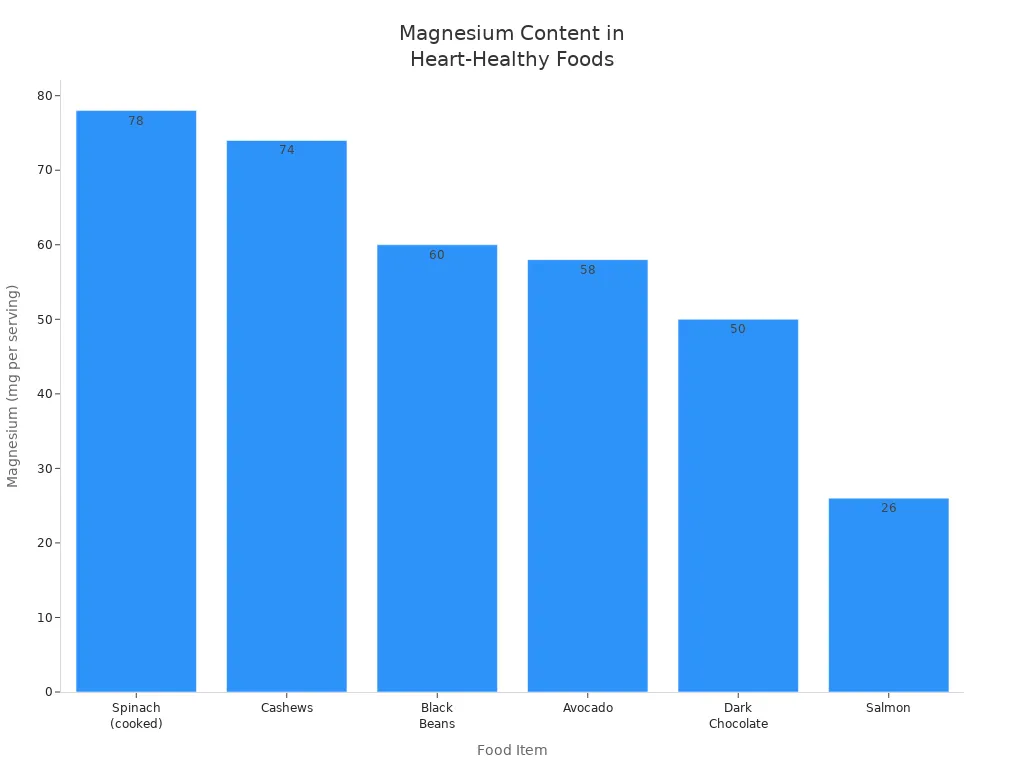
You can get magnesium from many tasty foods. Eating a variety of these foods helps your heart stay strong. Here is a table showing some of the best sources and how they help your heart:
Food Item | Magnesium Content (mg per serving) | Heart Health Benefits |
|---|---|---|
Pumpkin Seeds | 168 mg per 1 oz (40% DV) | High in fiber and antioxidants; protect cells |
Canned Mackerel | Rich in omega-3 fats; lower heart disease risk | |
Quinoa | 118 mg per cooked cup (28% DV) | Whole grain; reduces inflammation |
White Beans | 113 mg per cooked cup (27% DV) | High fiber; supports heart health |
Chia Seeds | 95 mg per 1 oz (23% DV) | Reduces cholesterol; high in omega-3s |
Cashews | 83 mg per 1 oz (20% DV) | Healthy fats; supports heart health |
Spinach (cooked) | Rich in nutrients for your heart | |
Almonds | 76.5 mg per 1 oz (18% DV) | Good for heart and magnesium intake |
Black Beans | 60 mg per ½ cup | High fiber; plant protein |
Avocado | 58 mg per medium fruit | Healthy fats; lowers inflammation |
Dark Chocolate | Antioxidants; protects arteries | |
Salmon | 26-71 mg per serving | Omega-3s; supports heart health |
Tip: Try mixing pumpkin seeds, spinach, and black beans in a salad for a magnesium boost!
Supplements vs. Food
You may wonder if you should get magnesium from food or supplements. Most experts say food is the best source. When you eat foods rich in magnesium, you also get other nutrients like potassium, fiber, and healthy fats. These nutrients work together to keep your heart rhythm steady.
Magnesium from whole foods absorbs better and supports your heart more effectively.
Whole grains, nuts, seeds, beans, and leafy greens give you magnesium and other heart-healthy nutrients.
Supplements help if you cannot get enough magnesium from food or if your doctor finds you have low levels.
Taking too many supplements can cause side effects like diarrhea or even heart rhythm problems.
Note: Always talk to your doctor before starting supplements, especially if you have health conditions.
You support your heart best by eating a variety of magnesium-rich foods every day. Supplements are helpful only when you need extra help or have a deficiency.
Preventing Heart Palpitations
Practical Tips
You can take steps every day to help with preventing heart palpitations. Magnesium plays a key role in keeping your heart rhythm steady. You should choose the right type of magnesium supplement for your needs. Magnesium Glycinate calms your nerves, Magnesium Taurate supports your heart, and Magnesium Citrate helps with absorption. Some people use Magnesium Malate for energy or Magnesium L-Threonate for brain health. Always talk to your doctor before starting any supplement.
Here are some practical tips to reduce heart palpitations and support heart health:
Pick a magnesium supplement that matches your symptoms and health goals.
Ask your healthcare provider about the best dose for you. Most adults need 310 to 420 mg of magnesium each day.
Eat foods rich in magnesium, such as leafy greens, nuts, seeds, and whole grains.
Use magnesium supplements daily if your doctor recommends them.
Watch for side effects like stomach upset. Too much magnesium can cause problems, especially if you have kidney issues.
Combine magnesium-rich foods with supplements for better results.
Tip: Magnesium Glycinate works well for stress-related palpitations. Magnesium Taurate is a good choice for heart rhythm support.
Monitoring Symptoms
You need to pay attention to your body when you want to manage palpitations. Keep track of how often you feel heart palpitations and what triggers them. Write down your symptoms in a notebook or use a phone app. This helps you and your doctor see patterns and make changes if needed.
Symptom | What to Watch For | When to Call Your Doctor |
|---|---|---|
Fluttering | Happens often | Lasts more than a few minutes |
Racing heartbeat | Starts suddenly | Comes with chest pain |
Skipped beats | Feels strong or frequent | Causes dizziness or fainting |
If you notice changes in your symptoms, talk to your healthcare provider. Regular monitoring helps with preventing heart palpitations and keeps your heart safe. You can use these tips to reduce heart palpitations and support heart health.
You have many options when choosing magnesium for heart palpitations. Magnesium taurate, glycinate, malate, citrate, and orotate each offer unique support for your heart. You should always use magnesium safely and talk to your healthcare provider before starting supplements.
Remember: Eating magnesium-rich foods and using supplements together can help you keep your heart healthy and your rhythm steady. 🫀
FAQ
What is the best time to take magnesium for heart palpitations?
You can take magnesium with a meal or before bed. Many people find bedtime works best. This helps your body absorb magnesium and may help you sleep better. Always follow your doctor’s advice for timing.
Can you take magnesium with other heart medications?
You should talk to your doctor before mixing magnesium with heart medicines. Some drugs may interact with magnesium. Your doctor can help you avoid problems and choose the safest plan for you.
How long does it take for magnesium to help with palpitations?
You may notice benefits within a few days to a few weeks. Your body needs time to build up magnesium levels. Keep track of your symptoms and share changes with your doctor.
Can you get enough magnesium from food alone?
Many people can meet their needs with food. Try eating nuts, seeds, beans, and leafy greens. If you have low magnesium or trouble absorbing it, your doctor may suggest a supplement.
Tip: Eating a variety of magnesium-rich foods supports your heart and overall health.