What Impacts Methylfolate Dosage for MTHFR


You may wonder what impacts methylfolate dosage for people with mthfr mutations. The way your body processes methylfolate depends on genetics, especially if you have a mutation like MTHFR 677C→T. This mutation can change folate and methylation pathways, which means you might need a personalized methylfolate dosage. Many people with mthfr polymorphisms use methylfolate instead of folic acid because their bodies cannot metabolize folic acid well. Personalized healthcare matters for you, so it is important to work with your provider. Clinical monitoring helps you adjust your dosage and keep your methylfolate levels safe.
Methylfolate Dosage Factors
You need to know that there is no standardized methylfolate dosage for people with mthfr mutations. Your dosage depends on your genetics, health conditions, and lab results. Healthcare providers use personalized approaches and clinical monitoring to help you find the right methylfolate dosage. You should start low, often less than 1 mg, and adjust your dosage based on your response and lab results. Both your mthfr gene mutation and your current health play a role in deciding your methylfolate dosage.
MTHFR Genetic Variants
Your mthfr gene mutation affects how your body uses folate. The two most common mthfr mutations are C677T and A1298C. The C677T variant changes the mthfr enzyme and can lower folate levels by about 16%. People with the c677t type mutation often have higher homocysteine, especially if their folate intake is low. The A1298C variant is less common and has a smaller effect on folate metabolism. If you have both mutations, you may have a greater risk of folate deficiency and higher homocysteine.
You can see how different mthfr genotypes affect enzyme activity and methylfolate dosage needs in the table below:
MTHFR Genotype | Enzyme Activity (% of wild-type) | Impact on 5-MTHF Production | Effect on Homocysteine Levels | Folate Requirement / Dosage Needs | Location in Enzyme | Additional Notes |
|---|---|---|---|---|---|---|
C677T CC | 100% | Normal | Normal | Baseline | Catalytic domain | Normal folate metabolism |
C677T CT | ~67% | Reduced | Elevated (moderate) | Slightly increased | Catalytic domain | Benefits more from folinic acid supplementation |
C677T TT | ~25% | Severely reduced | Elevated (significant) | ~1.4 times higher folate needed | Catalytic domain | Thermolabile enzyme form; altered folate derivatives in erythrocytes |
A1298C AA | 100% | Normal | Normal | Baseline | Regulatory domain | Minimal impact on homocysteine |
A1298C AC | ~83% | Mildly reduced | No significant change | Slightly reduced enzyme activity | Regulatory domain | No significant homocysteine reduction with supplementation |
A1298C CC | ~61% | Moderately reduced | No significant change | Moderate reduction in enzyme activity | Regulatory domain | Less impact on methylfolate metabolism than C677T |
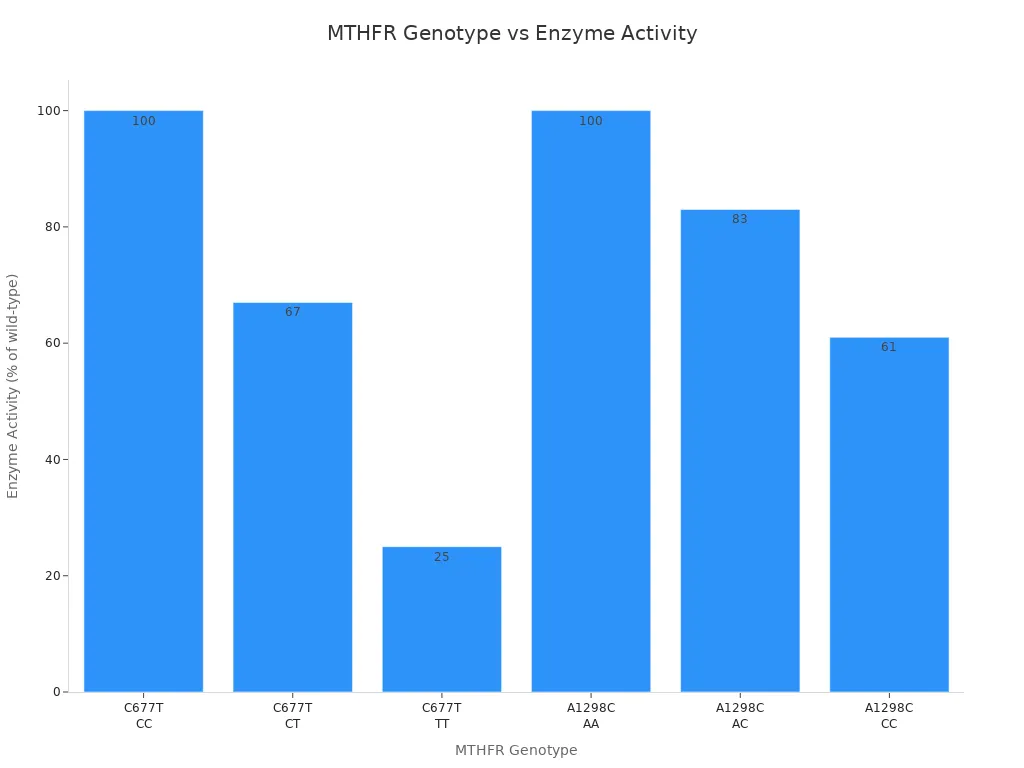
If you have the C677T TT genotype, your mthfr enzyme activity drops to about 25%. You may need a higher methylfolate dosage to support your folate metabolism. People with the A1298C mutation usually have mild or no significant changes in folate metabolism. Your genotype helps guide your methylfolate dosage, but you still need to consider your health and lab results.
Tip: Genetic testing can help you and your provider understand your mthfr gene mutation and choose a personalized methylfolate dosage.
Health Conditions and Symptoms
Your health conditions and symptoms also impact your methylfolate dosage. Mthfr mutations can lead to folate deficiency and higher homocysteine, which may cause health problems. You may notice symptoms like fatigue, mood changes, or anxiety. Some conditions linked to mthfr mutations include:
Depression
Bipolar disorder
Schizophrenia
Anxiety disorders
Autism spectrum disorders
High blood pressure
Certain cancers
If you have depression or anxiety, your provider may recommend methylfolate to support neurotransmitter production. Mthfr enzyme changes can affect serotonin, dopamine, and norepinephrine, which influence your mood and focus. People with treatment-resistant depression or ADHD may benefit from personalized methylfolate dosage. Your symptoms and diagnosis help your provider decide how much methylfolate you need.
Note: If you feel anxious after starting methylfolate, your provider may lower your dosage or stop the supplement. Monitoring your symptoms is important for safe dosing.
Folate Status and Lab Results
Lab tests help your provider monitor your folate status and adjust your methylfolate dosage. The main markers include:
Marker | What It Shows | Why It Matters for MTHFR Mutations |
|---|---|---|
Serum/Plasma Folate | Short-term folate levels | Detects recent changes in folate intake |
RBC Folate | Long-term folate status | More stable indicator of folate deficiency |
Homocysteine | Folate metabolism and deficiency risk | High levels suggest mthfr enzyme problems |
Your provider may check your serum folate, RBC folate, and homocysteine before starting methylfolate. If your homocysteine is high and your folate is low, you may need a higher methylfolate dosage. People with the C677T TT genotype often show bigger increases in RBC folate and larger drops in homocysteine after supplementation.
The Precision Folic Acid Trial found that people with the C677T TT genotype reach the best homocysteine reduction at lower folic acid doses (0.4–0.8 mg/day). Other genotypes need higher doses to lower homocysteine.
Folate levels rise with higher doses, but homocysteine lowering plateaus. Your provider uses these results to guide your methylfolate dosage and avoid unnecessary high dosing.
Monitoring your lab results helps you and your provider adjust your methylfolate dosage and prevent folate deficiency.
You should remember that methylfolate dosage is always personalized. Your mthfr gene mutation, health conditions, and lab results all matter. Clinical monitoring and regular lab tests help you stay safe and get the most benefit from methylfolate.
Diet and Lifestyle Impact

Dietary Folate Intake
You get folate from leafy greens, beans, citrus fruits, and fortified grains. Folate supports many body functions, including DNA repair and cell growth. During pregnancy, folate is vital for neural tube development and prenatal health. The recommended daily folate intake for adults is 400 mcg, which helps prevent neural tube defects and supports prenatal vitamins' effectiveness. This amount stays the same for people with MTHFR mutations. However, your body may not convert folate from food into methylfolate efficiently if you have an MTHFR mutation. Even with a healthy diet, you might not make enough active methylfolate for neural tube development and prenatal health. Supplements with L-methylfolate can help because they provide the bioactive form your body needs. You should also avoid synthetic folic acid, as it can build up in your system and may not help reduce the risk of birth defects if you have an MTHFR mutation. Supporting nutrients like B12, B6, choline, and magnesium, along with good gut health, also help optimize folate status.
Population Group | Recommended Daily Folate Intake | Additional Notes |
|---|---|---|
Adults (general) | 400 mcg folic acid daily (from supplements) | Supports neural tube development and prenatal health |
Women and teen girls who could become pregnant | 400 mcg folic acid daily | Essential for neural tube development and reduced risk of birth defects |
MTHFR mutation carriers | No separate recommendation | L-methylfolate supplements may be better utilized |
Lifestyle Habits
Your lifestyle choices can change how your body uses folate. Alcohol lowers folate absorption and increases how much folate you lose in urine. This can lead to folate deficiency, which affects neural tube development and prenatal health. Alcohol also blocks methylation, so you may need more methylfolate if you drink. Smoking lowers folate levels in your blood and red blood cells. Smokers often eat fewer folate-rich foods, but tobacco smoke also directly harms folate metabolism. This can increase your need for folate and methylfolate, especially during pregnancy when prenatal vitamins and neural tube development matter most. If you smoke or drink, you should talk to your provider about your folate and supplement needs to help prevent defects and support prenatal health.
Tip: Limiting alcohol and quitting smoking can help your body use folate better and improve prenatal health.
Environmental Factors
Some environmental exposures can lower folate levels and affect neural tube development. Sunlight, especially UV-B radiation, can break down folate in your blood. This is important if you have an MTHFR mutation, as your body already struggles to make enough methylfolate. UV exposure can also change how your enzymes work, making it harder to keep folate levels high. Other factors, like pollution or certain chemicals, may also impact folate metabolism. These environmental risks can increase the chance of neural tube defects and affect prenatal health. You can protect your folate status by wearing sunscreen, eating a folate-rich diet, and using the right supplement during pregnancy.
Sunlight (UV-B) reduces folate levels, especially in people with MTHFR mutations.
UV exposure can worsen folate deficiency and increase the risk of neural tube defects.
Environmental factors work together with diet and lifestyle to shape your folate needs.
Recommended Dosage of L-Methylfolate
Typical Starting Doses
You may notice that there is no official recommended dosage of l-methylfolate for people with MTHFR mutations. Healthcare providers do not follow a single guideline. Instead, they use their clinical judgment to decide what works best for you. Most providers start with a low dosage, often less than 1 mg per day. This approach helps you avoid side effects and lets your body adjust to methylfolate supplementation. Some clinical trials have used higher doses, such as starting at 5mg for certain conditions like depression, but this is not common for everyone with an MTHFR mutation.
You will find l-methylfolate in both over-the-counter and prescription forms. Multivitamins and prenatal vitamins usually contain folic acid, but people with MTHFR mutations may not process folic acid well. L-methylfolate gives you the active form of folate, which your body can use right away. You should always talk to your healthcare provider before starting any supplement, especially if you have a health condition or take other medications.
Note: Start with a low dosage and increase only if your provider recommends it. This helps you avoid unwanted side effects.
Adjusting Dosage Safely
Your methylfolate dosage should fit your needs. You may need to adjust your dosage based on your symptoms, lab results, and how you feel. Your provider will check your folate levels, homocysteine, and other markers to see if your body uses folate well. If you feel better and your lab results improve, your dosage may stay the same. If you have side effects, your provider may lower your dosage or stop the supplement.
You should take l-methylfolate with food to help your body absorb it and to reduce stomach upset. Watch for side effects like headaches, anxiety, or trouble sleeping. These signs may mean your dosage is too high. If you notice any problems, tell your provider right away. Never change your dosage on your own.
Here are some tips for safe methylfolate supplementation:
Start with a low dosage, such as 400-800 mcg per day.
Increase your dosage slowly if needed, under your provider’s care.
Take your supplement with food.
Monitor for side effects and report them to your provider.
Get regular lab tests to check your folate status and homocysteine.
Tip: Your methylfolate dosage may change over time. Regular check-ups help you stay healthy and avoid problems.
Special Considerations (e.g., Pregnancy)
Pregnancy changes your body’s need for folate. You need more folate during pregnancy to support your baby’s growth and prenatal health. If you have an MTHFR mutation, your body may not convert folic acid from prenatal vitamins into the active form. L-methylfolate supplementation helps you get the folate you need for healthy neural tube development and prenatal health.
During pregnancy, you should:
Work with your healthcare provider to find the right methylfolate dosage for you.
Choose prenatal vitamins that contain methylfolate instead of folic acid.
Take 400-800 mcg of methylfolate daily, or more if your provider recommends it. Some people with a history of neural tube defects or high-risk pregnancies may need up to 1,000 mcg or more.
Get genetic testing if you have a family history of MTHFR mutations or birth defects.
Monitor your folate levels and adjust your dosage as your pregnancy progresses.
Combine methylfolate with other nutrients like DHA and probiotics to support prenatal health.
Avoid taking too much methylfolate, as high doses can cause side effects or mask vitamin B12 deficiency.
Folate is essential for DNA synthesis and rapid cell growth in both you and your baby. Methylfolate supports healthy methylation, which is important for your baby’s brain, heart, and bone development. L-methylfolate is better absorbed than folic acid, especially if you have an MTHFR mutation. Taking the right dosage of methylfolate before and during pregnancy lowers the risk of neural tube defects, preeclampsia, and other problems. Prenatal vitamins with methylfolate help you meet your increased needs for folate and support prenatal health.
Callout: Always talk to your provider before changing your prenatal vitamins or methylfolate dosage during pregnancy. Personalized care keeps you and your baby safe.
L-Methylfolate Supplementation Safety
Monitoring and Lab Testing
You need regular monitoring when you take methylfolate, especially if you have an mthfr mutation. Your healthcare provider will check your homocysteine levels, folate status, and vitamin B12. These tests help you avoid folate deficiency and make sure your dosage is right for your body. Monitoring also helps catch problems early, like vitamin B12 deficiency, which can cause nerve damage if left untreated. You should not adjust your supplement on your own. Lab testing gives you and your provider the information needed to keep you safe.
Tip: Always ask your provider to check your homocysteine levels and vitamin B12 before and during methylfolate supplementation.
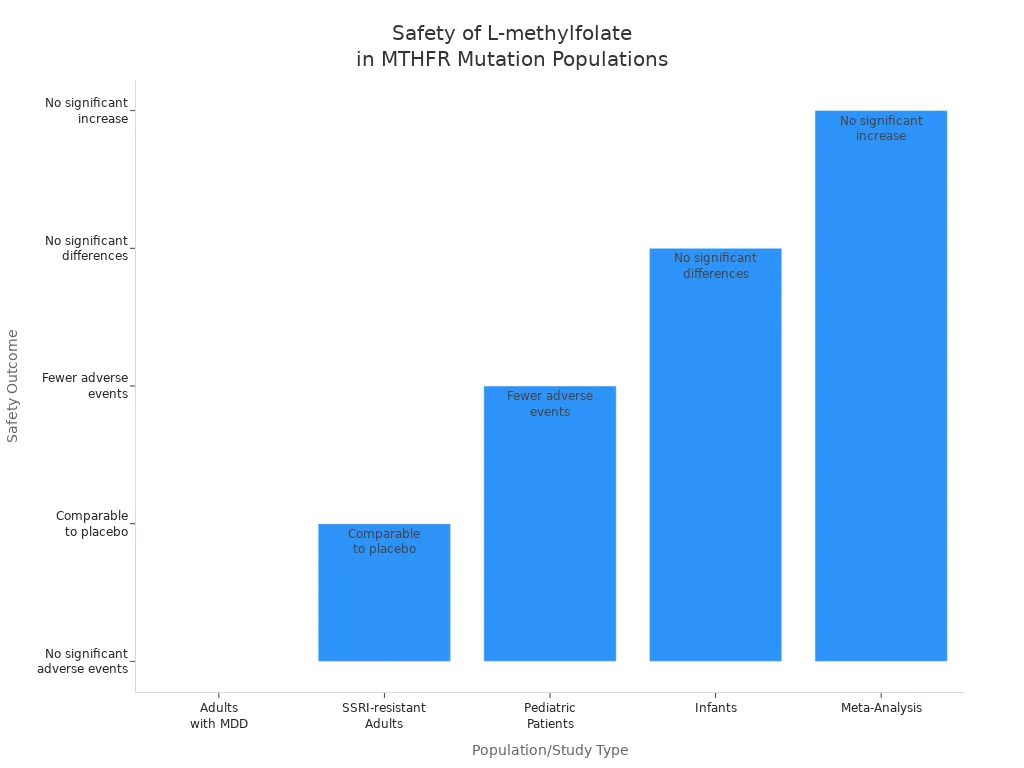
Studies show that l-methylfolate supplementation is safe for many people, including children and adults. The chart below shows safety outcomes in different groups:
Population/Study Type | Evidence Summary | Safety Outcome |
|---|---|---|
Adults with Major Depressive Disorder | 12-month open-label study of L-methylfolate calcium 15 mg adjunctive to SSRIs | Well-tolerated, no significant adverse events, 38% full recovery without recurrence |
Adults with SSRI-resistant MDD | Two randomized, double-blind trials with 15 mg/day L-methylfolate | Adverse event rates comparable to placebo, indicating good tolerability |
Pediatric and Adolescent Patients | Retrospective chart review (ages 7-20) and case series in treatment-resistant depression | Well-tolerated, fewer adverse events than comparators; improvements in depression and anxiety |
Infants | Randomized-controlled trial comparing L-5-methyltetrahydrofolate vs folic acid in infant formula | No significant differences in tolerance or adverse events |
Meta-Analysis and Systematic Review | Review of L-methylfolate augmentation in depressive disorders | Favorable safety profile, no significant increase in adverse events compared to antidepressants |
Risks of Incorrect Dosage
Taking the wrong dosage of methylfolate can cause problems. Some people with mthfr mutations feel severe migraines, even at very low doses. You might also notice symptoms like severe anxiety, nausea, insomnia, irritability, achy joints, or headaches. These side effects can start about a week after you begin supplementation. They may happen because of inflammation, other genetic issues, or problems with methylation. If you take too much methylfolate, you can mask vitamin B12 deficiency, which may lead to nerve damage. Over-supplementation with folic acid can also cause problems, such as increased risk of mental health disorders in children and toxic effects on the brain.
Common side effects of methylfolate supplementation:
Agitation
Anxiety
Digestive issues
You should not take methylfolate regularly without medical supervision. Always keep your provider informed about any new symptoms. Lower your intake of folic acid-rich foods if you are supplementing, and make sure you have enough vitamin B12. If you have depression, your provider should check for bipolar disorder before you start methylfolate, since it can trigger manic episodes.
Consulting Healthcare Providers
You should always consult your healthcare provider before starting or changing your methylfolate dosage. Some people have allergies, B12 deficiency, or seizure disorders that make methylfolate unsafe. Certain medications, like anticonvulsants or methotrexate, can interact with methylfolate. Pregnant or breastfeeding women need special guidance. Telemedicine providers can also help you get personalized advice.
Professional supervision helps you get the right dosage and avoid risks. Your provider can monitor your lab results, check for drug interactions, and make sure you do not develop folate deficiency or nerve problems. Medical foods with methylfolate are designed for people with mthfr mutations and should be used under a doctor’s care. This keeps your treatment safe and effective.
Note: Never adjust your methylfolate supplement on your own. Your provider will help you find the safest and most effective plan for your needs.
You need to consider many factors when choosing a methylfolate dosage for mthfr. Your personalized healthcare plan should include genetic testing, regular lab checks, and professional advice.
Personalized dosing supports prenatal health and neural tube development, especially during pregnancy.
Prenatal vitamins with methylfolate work better for mthfr than folic acid.
Personalized monitoring helps you avoid side effects and supports prenatal health.
Always talk to your provider before changing prenatal vitamins or methylfolate dosage. Personalized care keeps you and your baby safe during pregnancy.
FAQ
What is the difference between folic acid and L-methylfolate?
L-methylfolate is the active form your body uses right away. Folic acid needs conversion, which may not work well if you have an MTHFR mutation. You absorb L-methylfolate better.
Can you take methylfolate with other vitamins?
You can take methylfolate with vitamins like B12, B6, and magnesium. These nutrients help your body use folate. Your provider may suggest a combination for better results.
How do you know if your dosage is too high?
Watch for headaches, anxiety, or trouble sleeping. These signs may mean your dosage is too high. Tell your provider if you notice any side effects.
Tip: Start low and increase slowly. Always check with your provider.
Do you need a prescription for L-methylfolate?
You can buy L-methylfolate over the counter or get it by prescription. Prescription forms often have higher doses. Your provider will help you choose the right option.