Understanding Vitamin D3 Vegetarian Sources

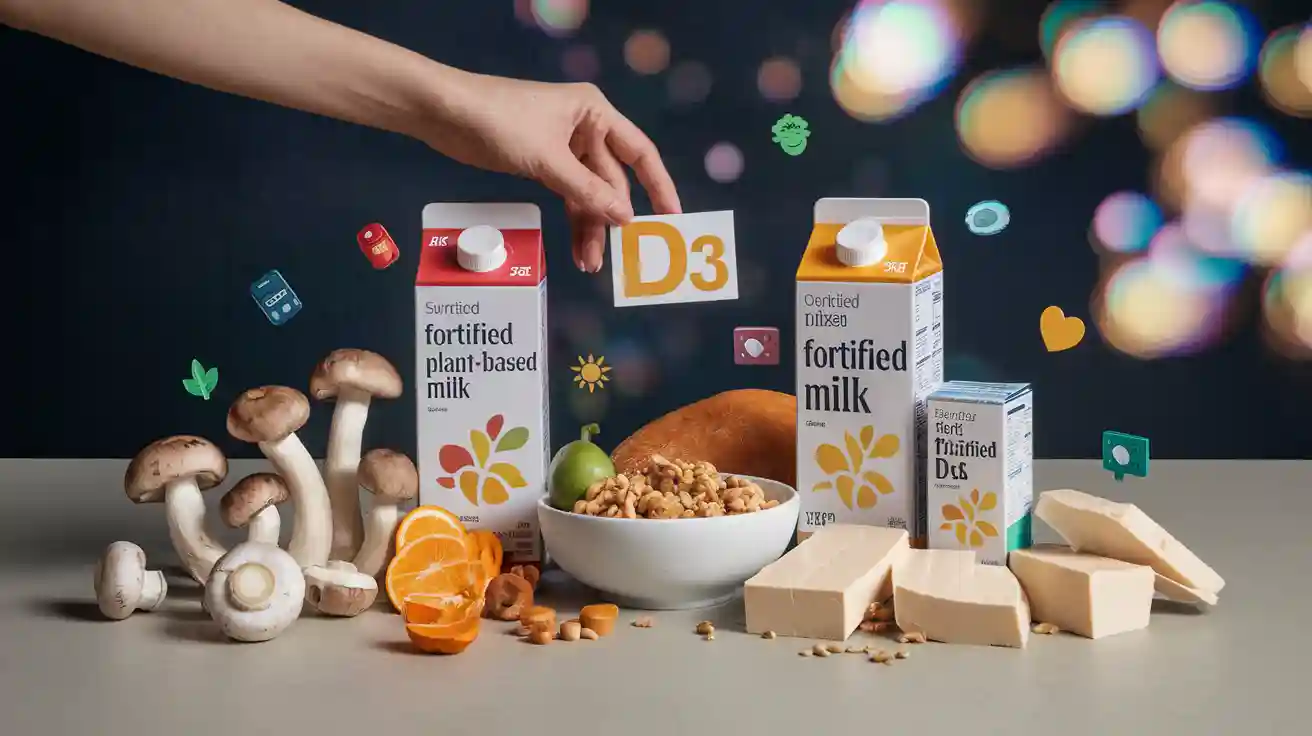
You might wonder if vitamin D3 vegetarian options truly exist. Many people know vitamin D3 helps your body absorb calcium and keep your bones strong. If you follow a vegetarian lifestyle, you may worry about where your vitamin D comes from. Some vitamin D3 comes from animal sources, while others use plants or lichen. Surprisingly, studies show the rates of vitamin D deficiency in vegetarians and nonvegetarians are quite similar.
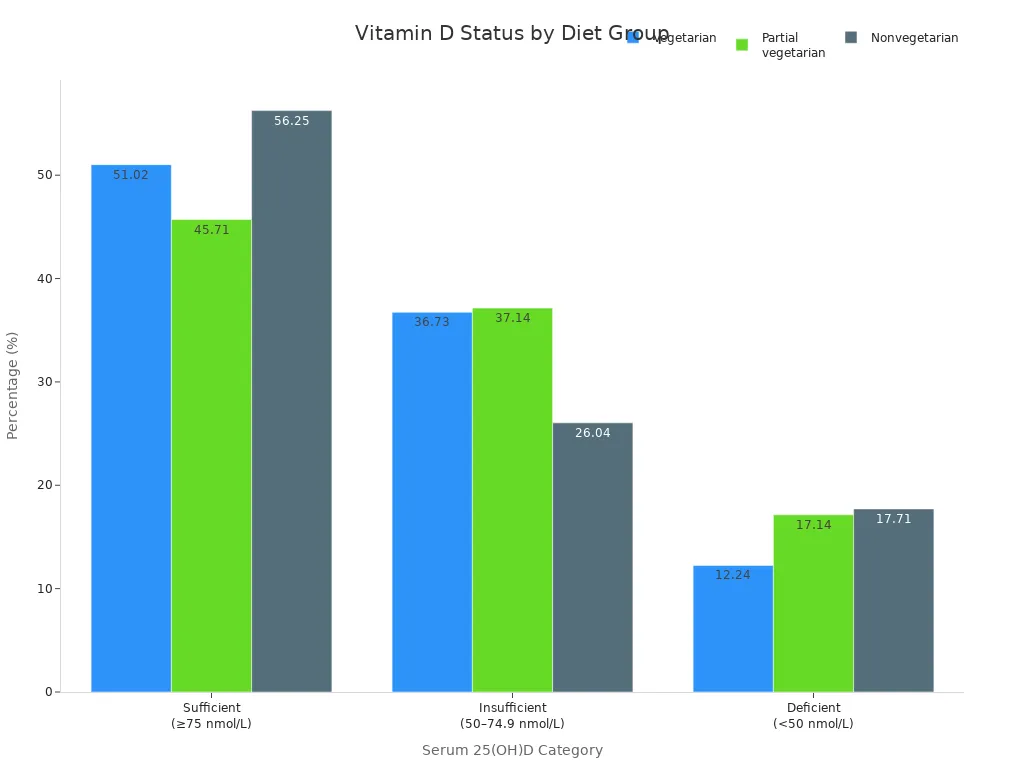
Think about your daily habits and what works best for your health. Making informed choices can help you meet your needs.
Is Vitamin D3 Vegetarian?
You might think all vitamins are plant-based, but that’s not always true. When you look for vitamin D3 vegetarian options, you need to know where the vitamin comes from. Most vitamin D3 on the market comes from animal sources. However, you can find vegetarian-friendly choices if you know what to look for.
Animal-Derived Sources
Most of the vitamin D3 you see in supplements or fortified foods comes from animals. The main sources include:
Lanolin, which is a waxy substance found in sheep’s wool
Fish oils, often taken from fatty fish
These animal products provide the cholecalciferol form of vitamin D3. Scientists report that animal foods like fish, meat, eggs, and dairy are the main contributors to vitamin D3 in most diets. Plant-based foods have very little natural vitamin D3. If you follow a vegetarian lifestyle, you may want to avoid these animal-derived sources.
Plant-Based and Lichen Sources
You do have options if you want a vitamin d3 vegetarian supplement. Lichen, a unique organism made of fungi and algae, can naturally produce vitamin D3. Manufacturers harvest lichens carefully to protect the environment. They use a non-toxic process to extract the vitamin, then test it to make sure it is pure and strong. This makes lichen-based vitamin D3 a good choice for vegetarians and vegans.
Lichen-based vitamin D3 works just as well as the animal-derived kind. Both types are chemically the same, so your body absorbs and uses them in the same way. Studies show that lichen-based vitamin D3 is just as effective and bioavailable as the kind from sheep’s wool or fish oil. You can feel confident choosing this option if you want to avoid animal products.
You might also see vitamin D2 in plant-based foods and supplements. Here’s a quick comparison to help you understand the difference:
Vitamin D Type | Source | Effectiveness in Raising Vitamin D Levels |
|---|---|---|
Vitamin D2 | Plant-based (fortified foods, mushrooms) | Less effective than D3 |
Vitamin D3 | Animal-derived (fatty fish, liver) and vegan sources (lichen, microalgae) | More effective in raising and maintaining levels |
Vitamin D2 comes only from plants, like mushrooms and fortified foods.
Vitamin D3 can come from animals or from lichen and microalgae.
Vitamin D3 raises your vitamin D levels better and keeps them higher for longer.
Vitamin D2 is vegan-friendly, but vitamin D3 vegetarian supplements from lichen are more effective.
Tip: If you want the best results, look for lichen-based vitamin D3 vegetarian supplements. They give you the benefits of D3 without using animal products.
Vitamin D Sources for Vegetarians
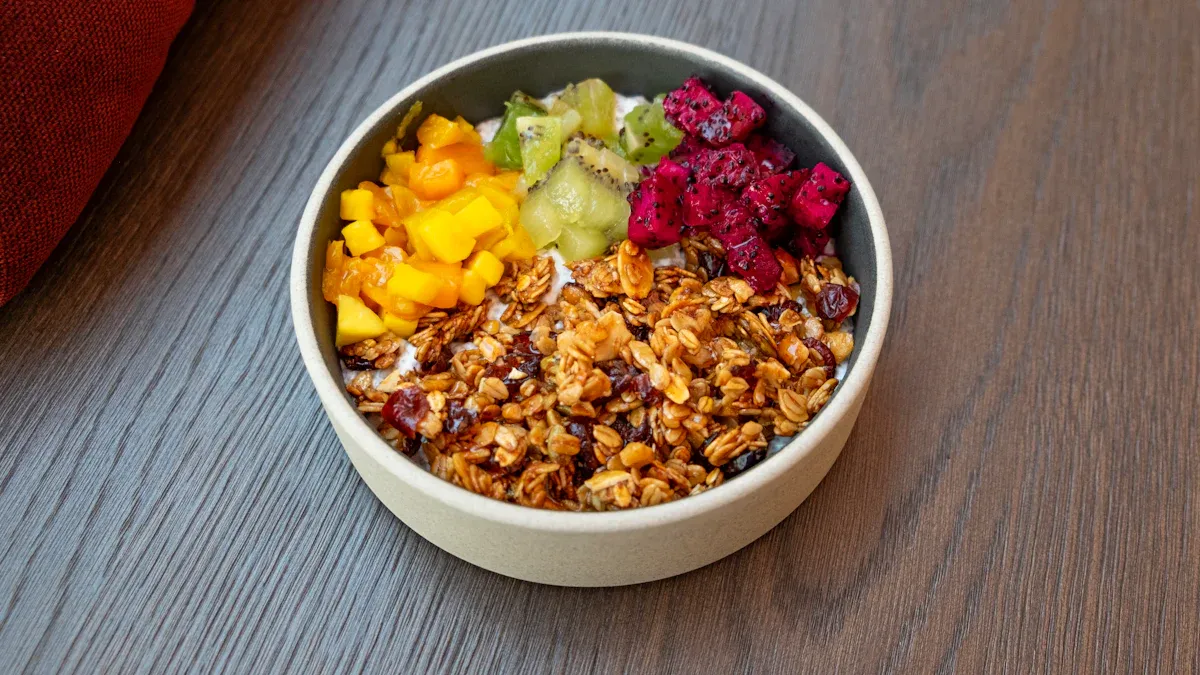
Finding the right vitamin d sources can feel tricky when you follow a vegetarian lifestyle. You want to make sure you get enough vitamin D3 vegetarian options to support your health. Let’s look at the best vegetarian vitamin d food sources and see how you can include them in your daily routine.
Foods High in Vitamin D3
You might wonder which foods high in vitamin d3 fit into a vegetarian diet. Most natural food source of vitamin d comes from animal products, but some plant-based foods can help. Mushrooms stand out as one of the top vegetarian vitamin d food sources, especially when they get exposed to ultraviolet light. Maitake and portobello mushrooms offer impressive amounts of vitamin D. Check out this table to see how much vitamin D you get from different foods:
Food | Serving | Vitamin D (IU) |
|---|---|---|
Maitake mushrooms | 1 cup, diced | 786 |
Portobello mushrooms | 1 cup, sliced | 634 |
Soy milk, original, fortified with vitamin D | 1 cup | 120* |
Almond milk, original, fortified with vitamin D | 1 cup | 100* |
Chanterelle mushrooms, raw | 1 cup | 114 |
Orange juice, fortified with vitamin D | 1 cup | 100* |
Soy yogurt, fortified with vitamin D | 150 grams | 80* |
Ready-to-eat cereal, fortified with vitamin D | ¾ 1 cup | 40* |
1 cup white mushrooms, exposed to UV light | 1 cup | 735 |
1 cup Portabella mushrooms, exposed to UV light | 1 cup | 958 |
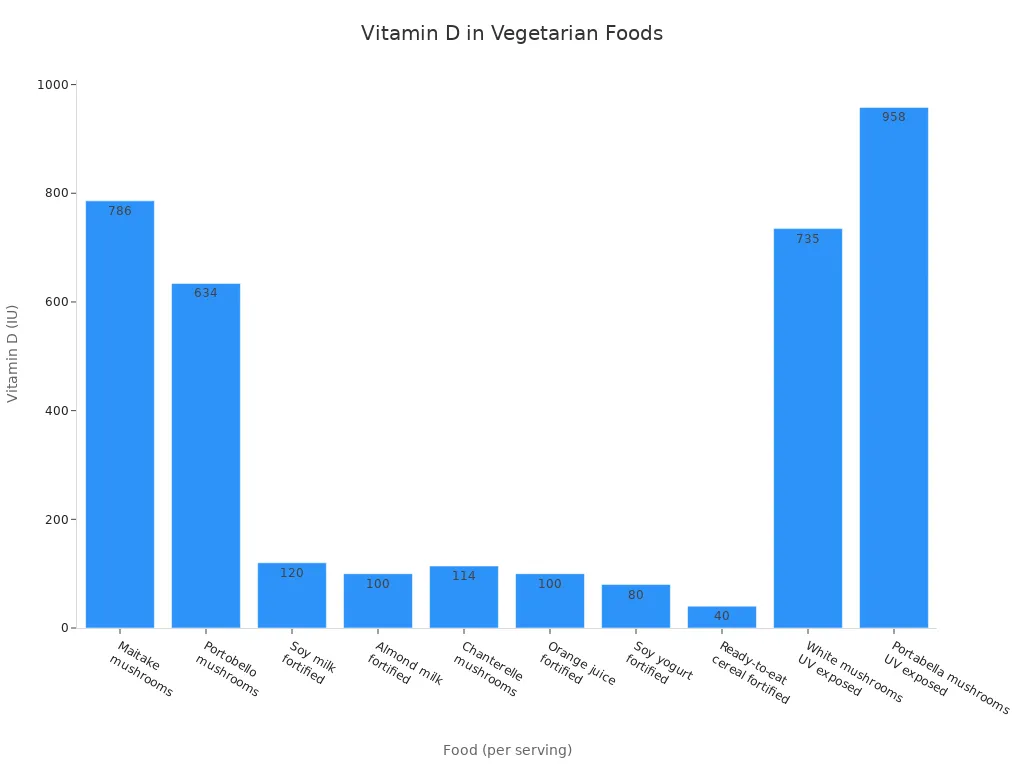
You see that mushrooms exposed to UV light can give you almost as much vitamin D as some animal foods. If you want vegan vitamin d food sources, mushrooms are a smart choice.
Fortified Foods and Mushrooms
You probably notice that many foods with vitamin d come from fortified foods. These products get extra vitamin D added during processing. You can find vitamin d sources in plant-based milks, cereals, and juices. Here are some popular options:
Fortified plant-based milks (soy, almond, oat)
Fortified cereals (Cheerios, Corn flakes)
Fortified orange juice
Some fortified dairy products also contain vitamin D, but they may not suit strict vegetarians or vegans. If you prefer vegan options, stick with plant-based milks and cereals.
Mushrooms offer another way to get vitamin d from food. When growers expose mushrooms to ultraviolet light, the mushrooms produce more vitamin D2. For example, common white button mushrooms can give you 24.2 micrograms of vitamin D2 per 100 grams. Eating about 84 grams of these mushrooms gives you around 566 IU of vitamin D2. If you eat mushrooms regularly, you can boost your vitamin D intake.
Tip: Try adding UV-exposed mushrooms to salads, stir-fries, or pasta dishes. You get a tasty meal and a healthy dose of vitamin D.
Sunlight as a Source
Sun exposure is one of the most reliable vitamin d sources for vegetarians. Your skin makes vitamin D when sunlight hits it. You don’t need to spend hours outside. Just 5 to 30 minutes of moderate sun exposure, at least twice a week, helps your body produce enough vitamin D.
Duration of Sun Exposure | Intensity | Frequency |
|---|---|---|
5–30 minutes | Moderate | At least 2 times a week |
But not everyone gets the same results from sunlight. Where you live, your skin type, and the time of day all affect how much vitamin D you make. Here’s a quick look at what matters:
Factor | Description |
|---|---|
Latitude | Higher latitudes have lower sunlight intensity, increasing the risk of Vitamin D deficiency. |
Season | Seasonal changes affect the ability to synthesize Vitamin D, especially in temperate regions. |
Time of Day | Midday solar radiation is most effective for Vitamin D production. |
Skin Pigmentation | Darker skin requires more time to produce Vitamin D due to higher melanin content. |
Amount of Skin Exposed | More skin exposure leads to greater Vitamin D synthesis. |
Sunscreen Use | Sunscreen can inhibit Vitamin D production by blocking UV light. |
Individuals with dark skin may need up to ten times longer to synthesize vitamin D compared to those with fair skin.
Living closer to the equator allows for more consistent vitamin D production throughout the year.
Dark skin has more melanin, which can inhibit vitamin D production.
Proximity to the equator enhances vitamin D synthesis due to increased sunlight exposure.
If you spend most of your time indoors or live in a place with little sunlight, you may need to rely more on vitamin d food sources or supplements.
Limitations of Natural Food Sources
You might think you can get enough vitamin d from food alone, but strict vegetarians and vegans face some challenges. Natural food sources of vitamin d are almost absent in plant-based diets. Studies show vegans often have lower vitamin D intake than people who eat animal products. This can lead to higher rates of deficiency and poor bone health.
Natural food sources of vitamin D are virtually absent in plant-based diets, making it difficult for strict vegetarians and vegans to obtain sufficient levels.
Studies indicate that vegans have a significantly lower dietary intake of vitamin D compared to omnivores, leading to higher rates of insufficiency and deficiency.
A systematic review highlighted that vegan diets are associated with lower vitamin D intake than omnivorous diets, which can contribute to poor bone health.
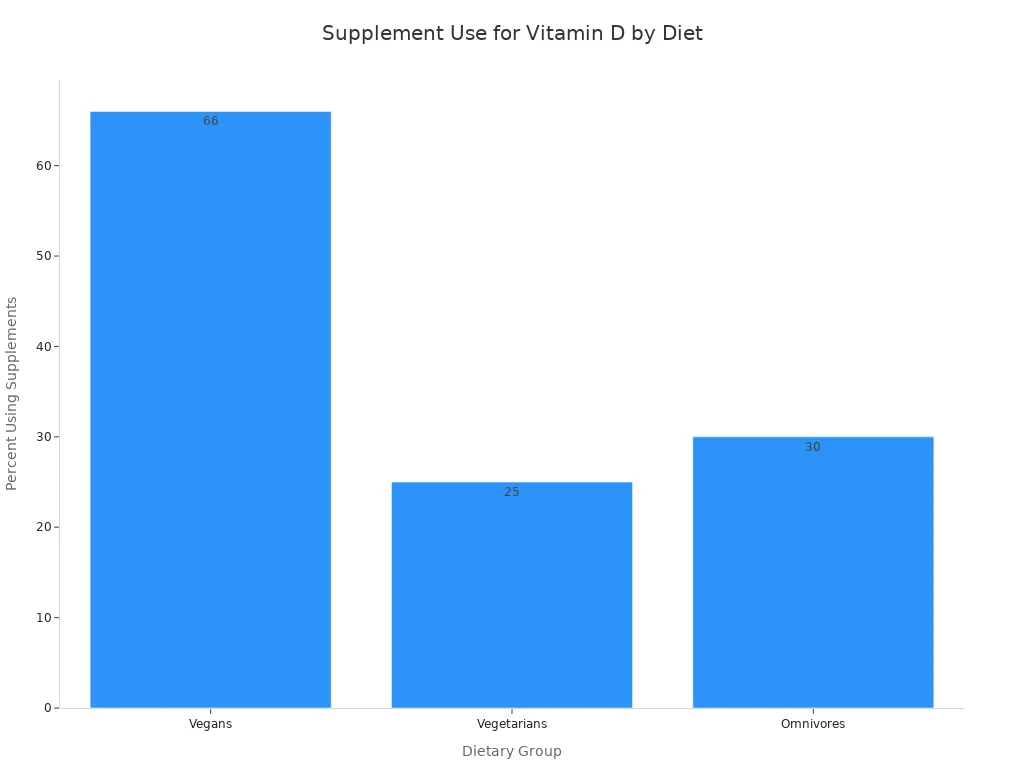
Many vegetarians and vegans turn to supplements to meet their needs. About 66% of vegans and 25% of vegetarians rely on supplements for vitamin D. Even 30% of omnivores use supplements.
If you want to keep your bones strong and your body healthy, you need to think about your vitamin d sources. You can choose vitamin d3 vegetarian supplements, eat more fortified foods, and enjoy safe sun exposure. Always check your options and pick what works best for your lifestyle.
Choosing Vitamin D3 Vegetarian Supplements
How to Identify Vegetarian D3
Shopping for a vegetarian vitamin D3 supplement can feel confusing. You want to make sure you pick the right one for your needs. Here’s a simple checklist to help you spot a true vegetarian option:
Check the source. Look for vitamin D3 made from lichen or algae, not lanolin from sheep’s wool.
Read the capsule ingredients. Choose capsules made from cellulose or other plant-based materials instead of gelatin.
Look for trusted certifications. Labels from vegetarian or vegan organizations give you extra peace of mind.
Ask questions. If you’re not sure, check the product website or contact the manufacturer.
Explore other forms. Some fortified foods and liquid drops offer vegetarian vitamin D3.
Tip: If you see “lichen-based” or “algae-based” on the label, you’re on the right track!
Supplement Types and Labels
You’ll find many types of vitamin D3 supplements for vegetarians. Some come as capsules, sprays, or liquids. Each type offers different dosages, so you can pick what fits your vitamin d intake goals. Here’s a quick look at some popular options:
Supplement Name | Form | Dosage (mcg/IU) |
|---|---|---|
Viridian vegan vitamin D3 | Spray/Drops/Capsules | Various (child-friendly) |
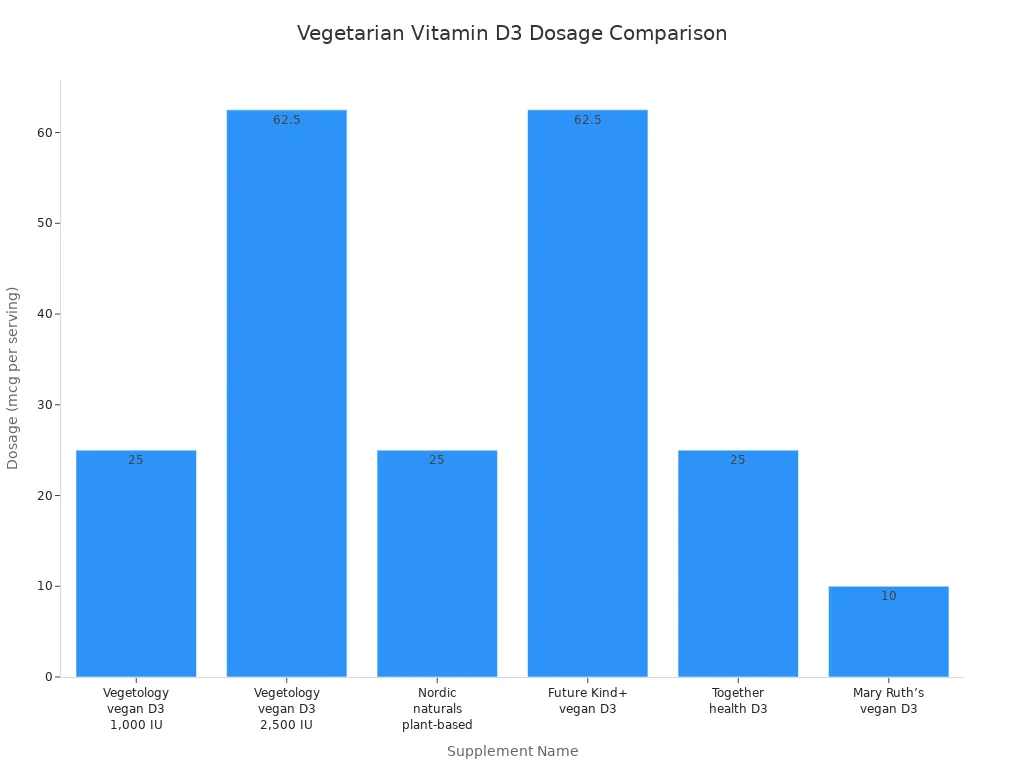
Vegetology vegan vitamin D3 | Pill/Spray | 25 mcg (1,000 IU) or 62.5 mcg (2,500 IU) |
Nordic naturals plant-based vitamin D3 | Liquid | 25 mcg (1,000 IU) per 0.5ml |
Future Kind+ vegan vitamin D3 | Capsules | 62.5 mcg (2,500 IU) per pill |
Together health vitamin D3 | Capsules | 25 mcg (1,000 IU) per pill |
Mary Ruth’s vegan vitamin D3 spray | Spray | 10 mcg (400 IU) per 4 sprays |
When you compare vegetarian and non-vegetarian supplements, you’ll notice a few differences. Vegetarian options often use algae or lichen, which means less processing and higher purity. They also avoid animal-based ingredients, making them a better fit for your lifestyle.
Source | Vegan | Processing | Sustainability | Purity |
|---|---|---|---|---|
Lanolin (sheep's wool) | No | Heavily refined | Less sustainable | Possible residues |
Algae-based D3 | Yes | Minimal processing | More sustainable | High purity |
Consulting Healthcare Professionals
Before you start any new supplement, talk with your doctor or a registered dietitian. They can help you figure out the best vitamin d intake for your age, health, and lifestyle. Sometimes, you may need a blood test to check your vitamin D levels. Your healthcare provider will look at both the active and inactive ingredients in your supplement. Some capsules use gelatin, which isn’t vegetarian, so always double-check.
Doctors often recommend vitamin d supplementation for vegetarians because plant-based diets have fewer natural sources. You need enough vitamin D to keep your bones strong and your immune system working well. If you have dark skin or spend little time in the sun, you might need to take a supplement all year.
Note: The NHS suggests that most people in the UK should take a vitamin D supplement from October to March. Some people may need it all year, especially if they have limited sun exposure.
If you want to improve your vitamin d intake, a vegetarian supplement can help you reach your daily goals. Always ask your healthcare provider for advice that fits your unique needs.
You now know that vegetarian sources of Vitamin D3 exist, but options remain limited. Check out this table for key research findings:
Key Finding | Description |
|---|---|
Vegetarian sources | Fortified foods and UV-exposed mushrooms help vegetarians meet their needs. |
Supplementation | Many vegetarians need supplements, especially in winter. |
Effectiveness | Vitamin D3 works better than D2 for raising levels. |
Always check labels for vegetarian-friendly ingredients.
Talk with your doctor to find the best plan for you.
Supplements can help vegetarians stay healthy when food sources fall short.
Remember, vegetarians need to stay informed and make choices that fit their lifestyle.
FAQ
What are the best vegetarian sources of vitamin D3?
You can find vitamin D3 in lichen-based supplements, UV-exposed mushrooms, and some fortified foods. These sources help you get enough vitamin D3 without animal products. Always check labels to make sure your vitamin D3 comes from vegetarian sources.
Can you get enough vitamin D3 from food alone?
Most natural food sources of vitamin D3 are animal-based. If you follow a vegetarian diet, you might not get enough vitamin D3 from food alone. You may need to use fortified foods or supplements as extra sources of vitamin D3.
How does sunlight help you get vitamin D3?
Your skin makes vitamin D3 when sunlight hits it. Sunlight is one of the most natural sources of vitamin D3. If you spend time outside, your body can make vitamin D3, but you still need to check if you get enough from other sources.
Are all vitamin D3 supplements vegetarian?
No, not all vitamin D3 supplements are vegetarian. Many come from animal sources like lanolin. Look for lichen-based vitamin D3 supplements. These sources are plant-based and work well for vegetarians who want to avoid animal products.
What is the difference between vitamin D2 and D3 for vegetarians?
Vitamin D2 comes from plant sources like mushrooms. Vitamin D3 usually comes from animal sources, but lichen-based D3 is vegetarian. Vitamin D3 raises your vitamin levels better than D2. For the best results, choose vegetarian D3 from lichen sources.