Understanding When Vitamins Start Working


You may notice changes from vitamins start working in your body within days or weeks, depending on the type you take. Water-soluble vitamins, like vitamin C and B vitamins, absorb quickly and often show effects within a few days. Fat-soluble vitamins, such as vitamin D, require more time because your body stores them in tissues. The table below shows why absorption timelines differ for these two groups:
Aspect | Water-Soluble Vitamins | Fat-Soluble Vitamins |
|---|---|---|
Rapid absorption due to direct uptake | Slower absorption due to complex digestion and transport | |
Storage | Circulate freely; excess excreted in urine | Stored in liver and adipose tissue, allowing longer retention |
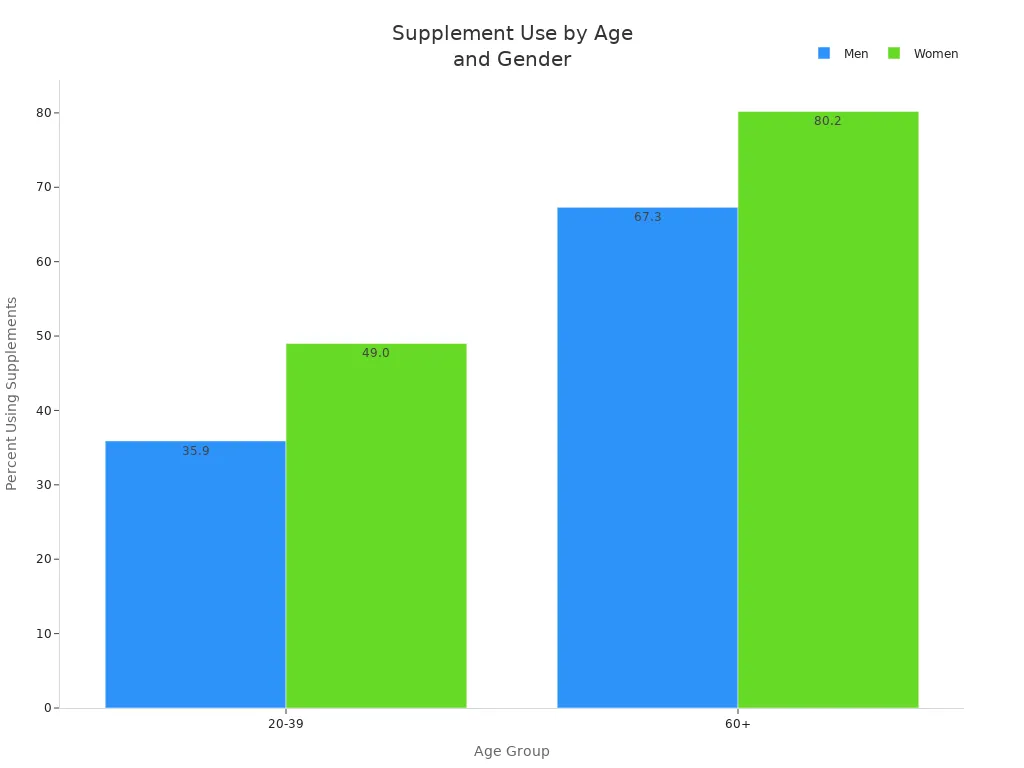
Many adults in the United States use vitamin supplements regularly. The chart below shows the percentage by age and gender:
When Do Vitamins Start Working?
Water-Soluble Vitamins
Water-soluble vitamins, such as vitamin C and B vitamins, enter your bloodstream quickly after you take them. Your body absorbs these nutrients within hours, so you may notice some effects soon after starting a supplement. If you have a deficiency, you might feel changes like more energy or less fatigue in just a few days. These vitamins do not stay in your body for long. You need to take them regularly because your body removes any extra through urine.
Aspect | Details |
|---|---|
Absorption speed | Rapid; enters bloodstream within hours |
Effect onset | Noticeable effects in hours to days, especially if you are deficient |
Storage and excretion | Not stored (except B12); excess leaves the body quickly |
Symptom improvement | Fatigue and low energy may improve in days to weeks |
Note: The time it takes for water-soluble vitamins to work depends on your health, how much you need, and how well your body absorbs them.
You may also experience minor side effects when you first start taking these vitamins. Upset stomach, diarrhea, or nausea can happen, but these usually go away as your body adjusts.
Fat-Soluble Vitamins
Fat-soluble vitamins, like vitamin D, take longer to show results. Your body stores these vitamins in your liver and fat tissues. Because of this, you may not notice changes for several weeks or even months. These vitamins build up slowly, so you need patience to see their full benefits.
Fat-soluble vitamins require fat for absorption.
They stay in your body longer, so you do not need to take them every day.
Effects may take weeks or months to appear, especially if you start with low levels.
If you wonder how long does it take for vitamins to work, remember that fat-soluble types need more time. You should also watch for side effects if you take high doses, as these vitamins can build up and cause problems over time.
Knowing when vitamins start working helps you set realistic expectations and track your progress.
How Long Does It Take for Vitamins to Work?

Deficiency Status
Your starting point matters when you want to know how long it takes for vitamins to work. If you have a severe deficiency, you may notice improvements sooner than someone with mild or no deficiency. For example, older adults with very low vitamin D levels showed greater gains in balance and walking speed after taking supplements. These changes became clear within months. The more severe your deficiency, the more dramatic and noticeable the benefits can be as your body responds to the nutrients.
Tip: If you suspect a deficiency, talk to your doctor. Testing helps you understand your baseline and track progress.
Supplement Consistency
Consistency plays a big role in how quickly vitamins start working. You need to take your supplements regularly to see results. Skipping doses or stopping early can slow down or even block the benefits. Setting a daily routine or using reminders helps you stay on track. When you take vitamins every day, your body absorbs and uses them more efficiently.
Take your vitamins at the same time each day.
Use a pill organizer or phone reminder.
Stay patient and stick with your routine.
Absorption and Bioavailability
Vitamin absorption depends on the form and delivery method. Some types enter your bloodstream faster than others. For example, vitamin B12 sprays work quickly because they bypass your digestive system. Fat-soluble vitamins like D and E absorb better when you take them with food that contains fat. The vitamin absorption rate also changes with different formulations. Microencapsulated vitamin D3 raises blood levels faster and keeps them higher than other forms. Slow-release vitamin C absorbs less efficiently than regular tablets.
Vitamin Type | Best Absorption Method | Notes |
|---|---|---|
Vitamin B12 | Oro-buccal spray | Fastest increase in blood levels |
Vitamin D3 | Microencapsulated or oil-based | Highest and longest-lasting absorption |
Vitamin C | Regular tablet or powder | Slow-release absorbs about 50% less |
Fat-soluble | With dietary fat | Food helps absorption |
Understanding these factors helps you set realistic expectations for when vitamins start working. Your health, supplement routine, and vitamin absorption all play a part in how soon you feel the effects.
How Long Do Vitamins Take to Work for Common Types?
B Vitamins
You may wonder how long do vitamins take to work when you start a B vitamin supplement. B vitamins, including B12, B6, and folic acid, often show results quickly if you have a deficiency. You can notice improvements in energy and mood within a few days, especially after an injection or high-dose oral supplement. Blood markers like homocysteine and methylmalonic acid usually improve in about one week. Neurologic symptoms, such as numbness or balance problems, may take between six weeks and three months to resolve. If you have anemia or other blood changes, expect improvement in about eight weeks.
Abnormality Type | Expected Time to Improvement |
|---|---|
Biochemical markers (homocysteine, methylmalonic acid, reticulocyte count) | |
Neurologic symptoms | Between 6 weeks and 3 months |
Hematologic abnormalities (anemia, leukopenia, changes in mean corpuscular volume, thrombocytopenia) | Around 8 weeks |
You can look for these signs to know if B vitamin supplementation is working:
More energy and less fatigue
Improved mood and reduced stress
Better memory and mental speed
Fewer balance problems or numbness
Blood tests show higher B12 levels and lower homocysteine
If you stop taking B vitamins, you may feel more tired and notice a drop in your quality of life.
You may also notice that B vitamins help slow bone loss and support brain health, especially in older adults. High-dose B vitamins can lower homocysteine and may reduce fracture risk over time. You can track effectiveness by checking blood tests and watching for symptom improvement.
Vitamin C
Vitamin C works fast in your body. If you ask how long do vitamins take to work, you may start to see the effects of vitamin C within a week. For example, athletes who took vitamin C for seven days before intense exercise had less inflammation and muscle damage. In older adults, vitamin C supplementation improved immune function after three months, and these benefits lasted for months even after stopping the supplement.
Duration of Supplementation | Observed Effect on Immune Function |
|---|---|
3 months | Significant improvement in immune parameters in elderly participants, reaching levels close to young adults |
6 months after stopping | Maintenance of improved immune function in several parameters |
You can watch for these signs that vitamin C is working:
Shorter and less severe colds
Reduced tiredness during illness
Fewer asthma attacks triggered by infections
Less exercise-induced breathing problems
Blood tests show higher plasma vitamin C levels (≥50 μmol/L)
Regular vitamin C intake helps you recover faster from colds and supports your immune system. Taking vitamin C after symptoms begin does not help as much.
Vitamin D
Vitamin D takes longer to show results. If you want to know how long do vitamins take to work for vitamin D, you should expect several months to a few years for full benefits, especially for bone health. Studies show that taking 700-800 IU of vitamin D daily for up to three years can reduce hip fracture risk and increase bone mineral density in older adults. Some people may not see improvements in bone health even after years of supplementation, depending on age, baseline vitamin D status, and other health factors.
Study Type | Population | Vitamin D Dosage | Duration | Outcome |
|---|---|---|---|---|
Meta-analysis of 12 RCTs | >19,000 persons >60 years | 700-800 IU/day | Up to 3 years | Reduced hip fracture risk by 26%, nonvertebral fracture risk by 23%, significant increase in bone mineral density |
RCT in ambulatory adults 65-85 years | 445 adults | 700 IU/day + 500 mg calcium | 3 years | Significant increase in total bone mineral density and reduction in nonvertebral fractures in women |
Meta-analysis of 11 RCTs | 34,243 older adults | 400-800 IU/day | 9 months to 5 years | No fracture protection observed |
Meta-analysis in primary hyperparathyroidism patients | 340 patients | Vitamin D2/D3 supplements | 1 to 12 months | Vitamin D replacement with modest effects on serum calcium |
You can measure effectiveness by checking your serum 25-hydroxyvitamin D [25(OH)D] levels. Levels below 50 nmol/L mean deficiency, and levels between 50 and 75 nmol/L mean insufficiency. Vitamin D also helps lower inflammation markers like CRP and IL-6, and may reduce hospital stays and ICU admissions in some cases.
You may need patience with vitamin D. Bone health and fracture risk improvements take time, but blood levels can rise within weeks.
Multivitamins
Multivitamins combine many nutrients, so how long do vitamins take to work depends on your needs and health status. You may notice mood improvements within one to two hours after taking a multivitamin. Stress and mental fatigue can decrease after four weeks of daily use. After eight weeks, you may feel better overall and have improved mood. Meta-analyses show that at least four weeks of supplementation can reduce mild mood dysfunction symptoms.
Time Frame | Observed Health Benefit | Population Studied | Notes |
|---|---|---|---|
1-2 hours (acute) | Immediate mood improvements, especially stress | Adults (mixed ages) | Mood benefits detected shortly after intake, confirmed by ecological momentary assessment |
4 weeks | Subtle reductions in stress and mental fatigue | Healthy older women (50-75 years) | Benefits mainly detected in home settings, not in lab assessments |
8 weeks | Improved current mood and retrospective mood | Men aged 50-69 years | More robust mood improvements observed with longer supplementation |
≥4 weeks (meta-analysis) | Reduction in mild mood dysfunction symptoms | Healthy adults | Meta-analysis supports mood benefits after at least 4 weeks of supplementation |

You can expect modest improvements in memory and cognition after two to three years of daily multivitamin use, especially if you are older. Long-term studies show benefits for people with nutritional deficiencies, such as reduced disease progression and improved survival. However, large studies in healthy adults found no link between multivitamin use and lower risk of death from cancer or heart disease.
Study/Consortium | Population | Intervention | Duration | Key Findings |
|---|---|---|---|---|
COSMOS-Clinic | Older adults (aged 60+) in the U.S. | Daily multivitamin vs placebo | 2-3 years | Modest improvement in global cognition and episodic memory; slowed cognitive aging by ~2 years. |
COSMOS-MIND & COSMOS-Web | Older adults (aged 60+) | Daily multivitamin vs placebo | 2-3 years | Consistent evidence supporting cognitive benefits, especially memory preservation. |
China Linxian Study | 29,584 residents aged 40–69 with nutritional deficiencies in rural China | Daily multivitamin supplementation vs placebo | Reduced progression of oesophageal dysplasia and impact on mortality in a nutritionally deficient population; long-term safety and effectiveness demonstrated. |
You may notice mood and energy changes first, but long-term benefits require consistent use. Multivitamins do not lower mortality risk in healthy adults.
Maximizing Vitamin Effectiveness

Tips for Better Results
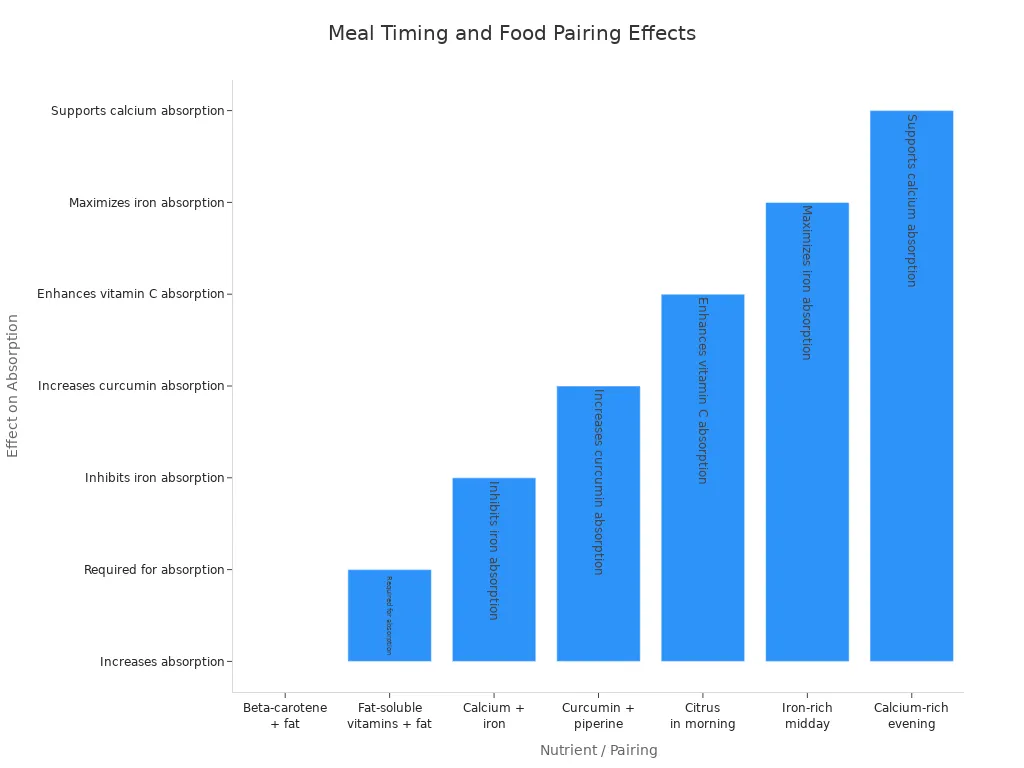
You can boost the effectiveness of your vitamin supplements by making smart choices in your daily routine. Take fat-soluble vitamins, such as A, D, E, and K, with meals that contain healthy fats like olive oil or eggs. Even a small amount of fat helps your body absorb these vitamins better. Pairing certain foods also improves vitamin efficacy. For example, eating vitamin D-rich foods with magnesium-rich foods helps both nutrients work well. Avoid taking calcium and iron together, since calcium can block iron absorption by up to 60%. Try to separate iron-rich meals from dairy, tea, or coffee.
Eat a balanced diet with plenty of fruits and vegetables.
Take supplements with food, not on an empty stomach.
Limit alcohol and manage gut health for better absorption.
Check food labels for nutrient content and quality.
Experts recommend using supplements to support a healthy diet, not replace it. Always follow guidance from your healthcare provider.
Monitoring Progress
Tracking your progress helps you see if your vitamins are working. You can use blood tests to measure vitamin levels, such as serum 25(OH)D for vitamin D or plasma vitamin C. Doctors may use special tests to check for inflammation, which can change vitamin readings. Keeping a record of your supplement intake and any changes in your health gives you and your doctor useful information.
Method | What It Shows | How to Use It |
|---|---|---|
Blood tests | Vitamin levels and deficiency status | Ask your doctor for testing |
Symptom tracking | Changes in mood, energy, or health | Write notes in a journal |
Intake monitoring | Amount and timing of supplements | Use a pill organizer or app |
Regular monitoring helps you adjust your routine and avoid taking too much or too little.
Consulting Healthcare Providers
You should talk to a healthcare provider before starting any new supplement. Doctors, dietitians, and pharmacists can help you choose the right vitamins and check for possible interactions with your medications. Bring a list of all supplements to your appointments. Testing for deficiencies before starting supplements ensures you get what you need. Remember, supplements are not a substitute for a healthy diet. Your age, health conditions, and medications can affect how your body absorbs vitamins, so professional advice is important.
Review your medical history and test for deficiencies.
Get personalized supplement recommendations.
Check for drug interactions and safety.
Adjust your plan based on lab results and health changes.
Ask for advice if you have special health needs or athletic goals.
Vitamin supplementation works best when tailored to your unique needs. Stay open with your healthcare team to maximize vitamin efficacy and overall effectiveness.
You can expect water-soluble vitamins to show mild effects within a day, with more noticeable benefits after a week or two. Fat-soluble vitamins often take weeks or months to work. Your age, health, and supplement routine all influence results.
Most people see the best results when they take vitamins consistently and follow healthy habits.
Specific groups, like older adults or those with deficiencies, may benefit more from targeted supplements.
Regular check-ins with your healthcare provider help you choose the right vitamins and avoid risks.
Taking charge of your health with smart, consistent choices can help you feel your best every day.
FAQ
How soon will I feel better after starting vitamins?
You may notice small changes within a few days if you have a deficiency. For most people, clear benefits appear after one to two weeks of regular use. Fat-soluble vitamins may take longer.
Can I take vitamins on an empty stomach?
You should take most vitamins with food. Fat-soluble vitamins need dietary fat for best absorption. Water-soluble vitamins may cause stomach upset if you take them without food.
What are signs that vitamins are working?
You might feel more energy, better mood, or improved focus. Blood tests can show higher vitamin levels. Some people notice fewer colds or faster recovery from illness.
Is it possible to take too many vitamins?
Yes, you can get too much of some vitamins, especially fat-soluble ones like A, D, E, and K. Too much can cause side effects. Always follow the recommended dose.
Do I need to take vitamins every day?
You should take water-soluble vitamins daily because your body does not store them. Fat-soluble vitamins stay in your body longer, so you may not need them every day. Always follow your healthcare provider’s advice.